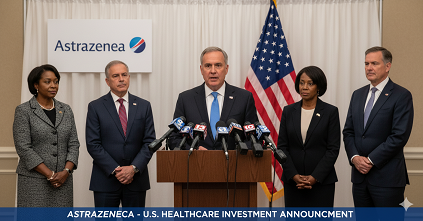

AstraZeneca has officially broken ground on a new pharmaceutical manufacturing facility in Virginia, marking a major milestone in its plan to expand operations across the United States. The Anglo-Swedish drugmaker announced a $4.5 billion investment in the site, which will become its largest manufacturing plant globally once completed.
The new facility is located in Albemarle County, roughly 120 miles southwest of Washington, D.C. It is expected to create 600 permanent jobs and generate around 3,000 construction-related positions during its development. The groundbreaking ceremony was attended by several prominent figures, including Virginia Governor Glenn Youngkin, AstraZeneca CEO Pascal Soriot, and Dr Mehmet Oz, Administrator of the Centers for Medicare and Medicaid Services.
This investment is part of AstraZeneca’s broader commitment to spend $50 billion by 2030 to strengthen its research and manufacturing presence in the U.S. The company said the Virginia plant will produce a range of medicines, including cancer treatments and future drugs for weight loss and metabolic conditions. AstraZeneca also revealed it is increasing its original budget for the site by $500 million to accommodate expanded production plans.
Dr. Oz praised the move, saying, “I congratulate AstraZeneca for their investment and invite other foreign manufacturers to follow suit.” His remarks reflect the Trump administration’s ongoing push to bring more pharmaceutical manufacturing back to American soil and reduce drug costs for consumers.
President Donald Trump has been vocal about his desire for pharmaceutical companies to produce more medicines domestically. He has used the threat of tariffs on imported drugs to encourage companies to invest in U.S. facilities and lower prices. Just last week, Pfizer announced it would reduce prices for Medicaid patients and new drugs in exchange for tariff relief, setting a precedent that other drugmakers may follow.
While these moves are seen as politically strategic, some analysts question their long-term impact. They argue that the price cuts may not significantly affect overall revenues or drug costs, suggesting that the announcements may be more about optics than substance.
AstraZeneca CEO Pascal Soriot has been navigating this complex landscape carefully. Earlier this year, he described the company as a “very American company” and has taken steps to align with U.S. policy goals. In addition to the Virginia plant, AstraZeneca recently listed its shares on the New York Stock Exchange and announced plans to sell diabetes and asthma medications directly to American patients at discounts of up to 70%.
At the groundbreaking, Soriot emphasized the importance of the new facility, stating it would “strengthen America’s national security and health sovereignty.” He also criticized European governments for not investing enough in healthcare, highlighting the contrast between U.S. and European approaches to pharmaceutical development.
The Virginia plant is expected to play a key role in AstraZeneca’s future, not only by increasing production capacity but also by helping the company meet growing demand for innovative treatments. As the pharmaceutical industry continues to evolve, AstraZeneca’s investment signals a strong commitment to the U.S. market and a willingness to adapt to shifting political and economic pressures.
Local officials have welcomed the project, citing its potential to boost the regional economy and attract further investment. The facility is expected to be a hub for advanced manufacturing, research, and development, contributing to both job creation and healthcare innovation.
With construction now underway, AstraZeneca aims to have the facility operational within the next few years. The company’s move reflects a broader trend among global drugmakers to localize production and respond to changing regulatory and political landscapes. As the U.S. government continues to push for lower drug prices and greater domestic manufacturing, AstraZeneca’s Virginia plant could serve as a model for future investments in the sector.