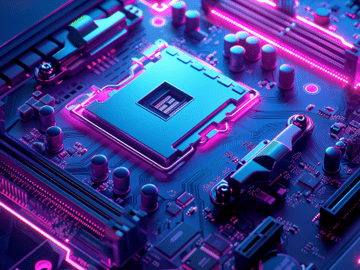

The introduction of Nvidia's RTX Spark chip highlights the ongoing shift toward AI-enabled personal computing. By supporting local AI processing in laptops and desktops, the new chip aligns with the rising demand for devices capable of running AI applications on-device. Growing adoption of such systems continues to contribute to the expansion of the AI PC market. NVIDIA introduced the RTX Spark chip ahead of the Computex 2026 event, where CEO Jensen Huang highlighted the future of personal computing. The company developed the chip in partnership with MediaTek to deliver high performance. It will soon power devices from Dell, Lenovo, HP, ASUS, and others. These systems will enter the market later this year, offering enhanced AI-enabled laptops and desktops. As a result, competition in the AI hardware innovation space is intensifying.
Moreover, the RTX Spark chip supports local AI inference and autonomous AI agents. These agents can perform tasks without requiring an internet connection at all times. This innovation will help the user execute a private AI agent on his or her device. It enhances speed and ensures the security of data as well. The processor helps conduct the AI workloads in real-time according to the demands of the user.
The launch reflects Nvidia’s broader strategy to expand beyond traditional GPU markets. The company now focuses on chips used for AI inference that run ordinary software. The firm targets a specific segment in the AI chips market. Moreover, Nvidia revealed the Vera CPU to support these endeavors. All this demonstrates the company’s initiatives for reinventing future computing systems and increased rivalry with companies like Intel, AMD, and Apple.
In the middle of this transformation, Nvidia RTX Spark stands out as a key driver of agentic computing platforms. The chip facilitates the ability of devices to perform workflows using AI technology automatically. The technology helps autonomous digital assistants operate without needing any human intervention. This represents a move away from software-based technology to AI-based PCs. With this, there will be changes in how people interact with computers in the future.
Furthermore, Nvidia continues to strengthen partnerships with software providers. Collaboration between Microsoft and the organization revolves around combining the AI software with hardware technologies. In addition to ensuring that the AI software works seamlessly with the hardware, this move boosts the user experience enabled by AI technology. Both initiatives set the stage for the future of personal AI computing.
Industry experts believe the launch could redefine how people use personal computers. Traditional systems rely heavily on cloud-based AI services. However, local processing allows devices to operate independently. This approach improves efficiency and reduces latency. It also supports privacy by keeping data on the device. As a result, the shift toward edge AI computing gains momentum.
Additionally, Nvidia RTX Spark supports emerging enterprise AI applications. AI-capable desktops can help businesses automate work processes and carry out data analyses. AI workstations can be powered by the chip for high-performance computations. This ability addresses the increasing need for distributed AI computing capabilities in various sectors. Modern businesses require platforms that are fast, powerful, and secure.
In the United States, this development could accelerate the adoption of AI-enabled laptops and desktops. Companies may invest more in advanced computing devices to remain competitive. This will benefit organizations through increased productivity and innovation in business technology. The other possible outcome is that there will be an increased demand for intelligent personal computing.
The growth of Nvidia RTX Spark also strengthens expansion in the AI PC market. Manufacturers are focusing on devices that support local language model execution and machine learning acceleration. This demand will drive further innovation in AI infrastructure and consumer hardware. As more users adopt AI-native PCs, the market will continue to grow rapidly.
AI PC adoption continues to rise as devices become smarter and more efficient. Users now prefer systems that deliver real-time AI-powered productivity tools. This trend highlights the increasing role of edge-based computing in daily life. NVIDIA RTX Spark marks a major step in the evolution of personal computing. By bringing AI closer to users, the company sets a new standard for intelligent devices. As adoption grows, Nvidia RTX Spark will play a crucial role in shaping the future of AI-powered PCs and everyday technology.