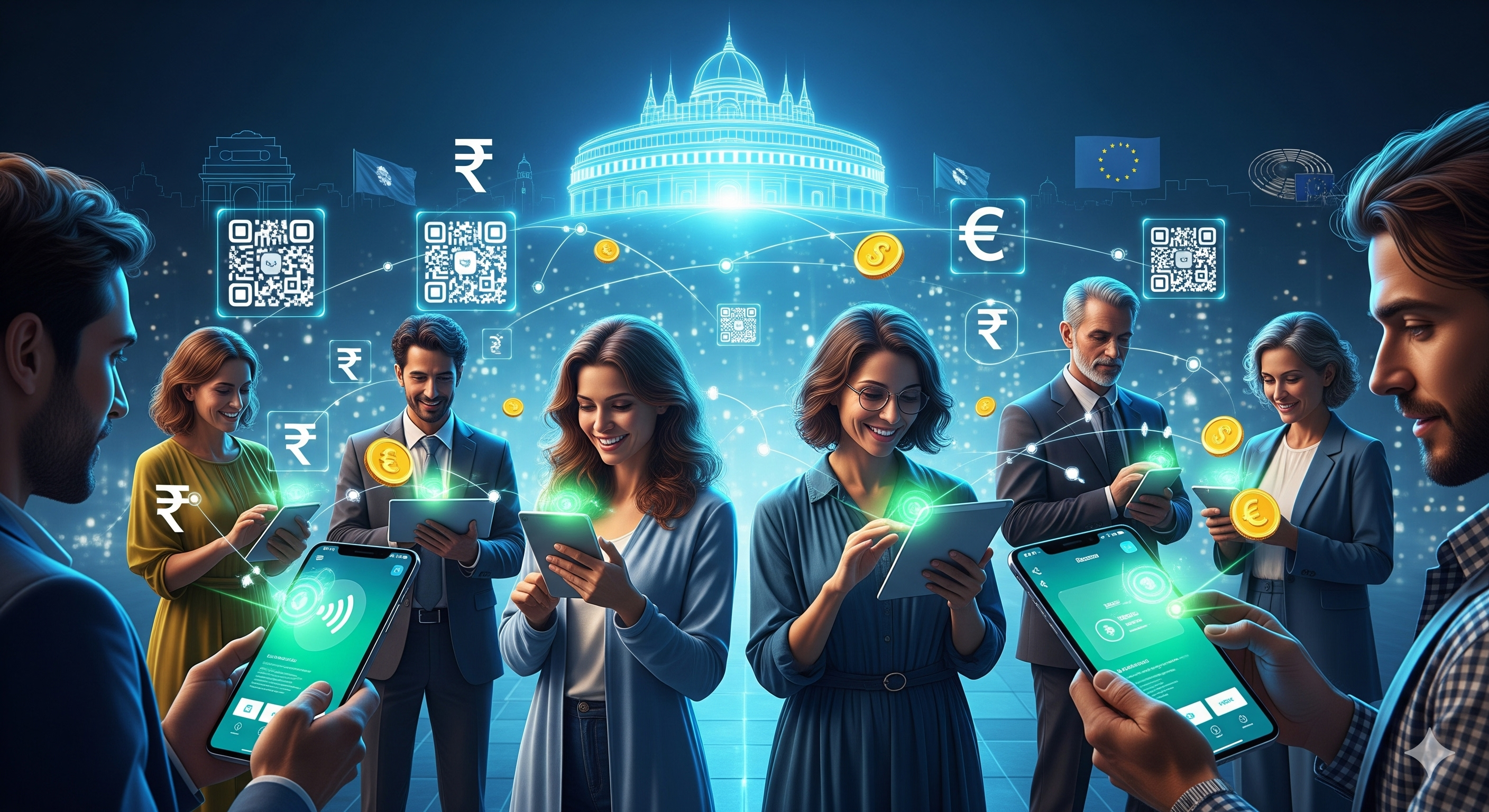

Think about the last time you paid for something without using cash or swiping a card. Chances are, you used some kind of virtual point-of-sale system, whether it was online, scanning a QR code at a street vendor, or just tapping your phone. These virtual payment systems have slowly infiltrated the way we purchase. Tech companies grab a lot of headlines with flashy new tools, but regions and governments are doing much of the "heavy lifting" behind the scenes to create the conditions, infrastructures, rules about risks, and security that will allow these virtual payments to succeed.
Let's look at two of the leading regions, India and Europe, as they shape the future of virtual payments with innovative digital policies.
India’s Digital Payment Boom
If you’d told someone just a decade ago that India would become a global leader in mobile payments, many would have raised an eyebrow. Back then, cash was king, no question. But today, things have flipped completely. According to government data, digital payments skyrocketed from about 2,000 crore transactions in 2017–18 to nearly 18,600 crore just a few years later in 2023–24. That’s a mind-boggling leap.
The engine behind this growth? The Unified Payments Interface, or UPI. This system lets people send money instantly between bank accounts using their phones, basically like sending a text message. It’s ridiculously simple and now accepted everywhere, from big malls to local vegetable stands. In fact, UPI alone handled more than 13,000 crore transactions in the last fiscal year. Experts expect that to cross 20,000 crore soon, as people trust it more every day.
This digital wave has reshaped business, too. Small and medium-sized enterprises (SMEs) across the country are jumping on app-based and QR code payment options because they’re cheaper and more flexible than old-school card machines. This is huge in a country as varied as India, where a one-size-fits-all approach rarely works.
What’s also fascinating is that India isn’t keeping this success to itself. UPI is spreading overseas to the UAE, Bhutan, and Singapore, and even testing the waters in places like Nepal and France. This isn’t just about virtual payments; it’s about Indian fintech going global and connecting different countries through virtual money transfers.
Europe’s Race for Instant and Secure Payments
Across the continent, Europe is playing a different but just as important game. The focus of the EU is on facilitating payments that are fast, secure, and fair. In March 2024, they introduced new legislation called the Instant Payments Regulation (IPR) to initiate changes in the way money flows from bank account to bank account among member countries.
Here’s the gist: payment providers now have to offer round-the-clock instant transfers. No waiting hours or days; money should move immediately at any time of day or night. Plus, the fees for these instant payments can’t be higher than regular ones, which keeps costs down. The regulation also requires users to verify who they're transacting with without incurring extra costs and requires monitoring on a daily basis to block payments related to financial sanctions. These steps won't feel like compliance measures; they are the building blocks of trust in the payments ecosystem and will contribute to safer and more reliable virtual payments.
Rolling out these rules won’t happen overnight. Eurozone countries have to be ready to receive instant payments by January 2025 and send them by October. Other countries get a bit more time. This slow rollout is smart, especially for smaller businesses that rely on these systems and need time to adapt.
The Digital Euro: Europe’s Next Big Move
But Europe isn’t stopping there. The European Central Bank is working on something called the digital euro, a government-backed digital currency. It’s designed to sit alongside cash and regular digital payments, adding an extra layer of security and resilience.
The digital euro might work on multiple servers, so if one goes down, payments don’t stop. There could even be a central ECB wallet app for users to pay if their bank’s app crashes. And get this, it might allow offline payments, meaning you could buy something even without internet access. That could be a game-changer in remote areas or during power outages.
What It Means for Businesses and You
What all this means is pretty simple: governments are making virtual payments easier, safer, and more affordable. For businesses from big chains to tiny shops, this means less hassle, lower costs, and more customers able to pay digitally.
For consumers, the benefits are clear too. Payments get faster, fees drop, and protections against fraud improve. Whether you’re in Delhi paying for your groceries or in Paris buying online, your payment experience is getting smoother and more secure.
Virtual Payments Made Safer by Policy
The rise of virtual payment systems isn’t just a tech story. It’s a story about governments stepping in with policies, investments, and smart regulations that make digital payments work better for everyone. India’s focus on digital inclusion and international growth, combined with Europe’s drive for speed and security, is creating a global payments ecosystem that’s robust and ready for the future.
As we head deeper into the decade, virtual payments will become part of everyday life, how we shop, send money, and run businesses. And due to these government moves, the future of virtual payments looks bright for both businesses and consumers alike.