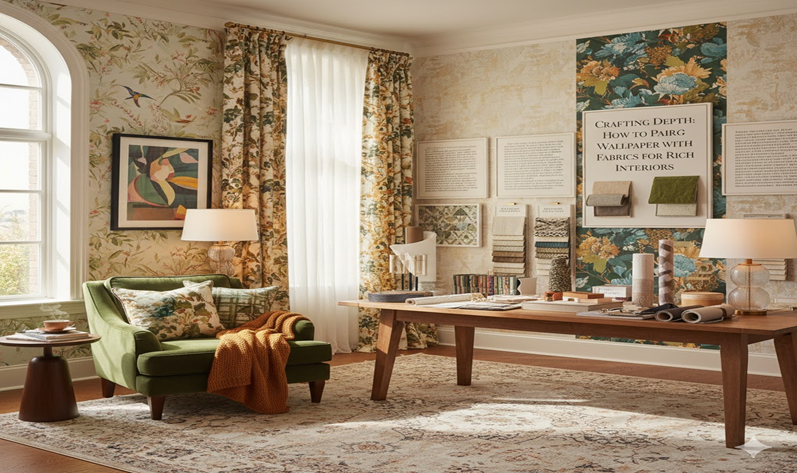

When you layer wallpapers with fabrics thoughtfully, your home radiates warmth, depth, and personality. In this guide, I will walk you through strategic ways to combine wall coverings and textiles so each room tells a harmonious story. Moreover, you’ll learn to avoid visual chaos while celebrating textures, colours, and patterns that elevate everyday spaces.
The Value of Visual Layering
Visual layering is not just decoration; it’s design storytelling. A wallpaper introduces mood and backdrop, while fabrics add softness, movement, and tactile dimension. Together, they create cohesion that feels curated and rich. When used well, your walls and furnishings speak to one another instead of competing.
Start by acknowledging the power of contrast. Bold wallpaper needs calm textiles; subtle wallpaper calls for bolder fabrics. By balancing these opposites, you maintain an elegant equilibrium that feels intentional rather than accidental.
Choose Your Palette First
Always begin with colour. Decide on two to three dominant hues, plus one accent tone. This disciplined palette anchors your combinations. You might choose muted greens and blues as your core, then punctuate the space with a burnt ochre accent.
Even when a wallpaper carries multiple tones, define a dominant base first. Then let fabrics echo or softly contrast those tones. When colours converse gently, they generate harmony without monotony.
Patterns: Mix, Don’t Match
Avoid the trap of replicating the wallpaper pattern perfectly in your fabrics. That level of uniformity feels sterile. Instead, mix pattern types, pair florals with geometrics or stripes with organic prints. This variety generates visual interest without straining cohesion.
Ensure that the scale of patterns varies too. If the wallpaper features large motifs, go with small-scale prints in cushions or curtains. Conversely, use bolder prints on textiles when the wallpaper is understated. Balance is key.
Texture Brings Life
Whether fabrics are smooth linen or plush velvet, texture gives depth. Add tactile elements through throws, cushions, and upholstery. A delicate silk curtain next to a textured wallpaper elevates the space. Conversely, if wallpaper is matte or flat, go for fabrics with a little sheen or relief.
Think in layers: sheer curtains closest to the wall, then heavier drapes or throws in the foreground. This cascading effect reinforces depth and invites touch.
Lighting Matters Greatly
Never judge a pairing under just one light source. Natural daylight brings out one set of tones; artificial light reveals another. Always view your combinations at different times of day.
If your room has little natural light, choose lighter-toned fabrics and wallpapers. Dark patterns can absorb too much light and make the space feel closed. Meanwhile, incorporate lamps or accent lighting to highlight texture and detail at night.
Create a Cozy Corner
For a snug retreat, bring together wall and textile layers in compact zones. Think reading nooks or window seats. Use wallpaper in that zone as a backdrop. Add throw pillows, a soft blanket, or even a plush rug to heighten tactile appeal.
These corners let you experiment in a smaller area before extending the concept to larger rooms. They become proof-of-concept spaces where layering feels bold yet contained.
Incorporate Artfully Chosen Wall Art
Once wallpaper is your canvas, layer in art that either complements or contrasts it. A richly patterned wallpaper may benefit from minimalistic frames or abstract art. Conversely, simpler wallpaper might accommodate more ornate and complex art.
Let fabrics complement that art piece, too. The textile tones should reference the art in subtle ways, making the overall composition feel deliberate.
Practical Dos and Don’ts
- Do stick to your palette. If the wallpaper introduces pink, green, and gold, keep fabrics within those bounds.
- Do vary scale. Large motifs with small patterns avoid visual conflict.
- Do balance boldness. Pair intricate wallpaper with simpler textiles and vice versa.
- Don’t overdo matchy-matchy pattern repetition.
- Don’t ignore lighting; always test combos under multiple lighting conditions.
- Don’t overcrowd. Let the wall and fabric layers breathe.
Realizing Rich Interiors in Any Room
In a living room, choose a wallpaper that defines the mood—perhaps serene botanicals or a geometric drama. Then let your sofa, cushions, and curtains echo one or two tones. Use accent fabrics sparingly to avoid distraction.
For bedrooms, wallpapers can act as headboard backdrops. Drape fabrics in curtains, throws, and bedding that layer soft with firm. Always maintain a soothing balance of tones to promote rest.
In small spaces like hallways or powder rooms, let wallpaper do the heavy lifting. Use simpler fabrics or solid colours to avoid visual overload. A bold wall with clean textiles can look elegant even in tight quarters.
Final Thoughts: Let Your Home Tell a Tale
Pairing wallpaper with fabrics is more than interior design; it is narrative. Each room becomes a chapter in your home’s story, told through colours, textures, and patterns. When done with intention and balance, your space feels layered, lived-in, and timeless.
Use curated palettes, varied scales, and complementary textures. Test your combinations in every light. And above all, let your personal aesthetic guide the harmony. With thoughtful layering, your home will feel rich, warm, and deeply you.