
The world of technology is currently standing at the edge of a major shift. For over a decade, our digital lives have been trapped inside a grid of apps on a glass screen. However, a new vision is emerging, one where the objects around us, from our headphones to our glasses, become smart enough to help us without needing an app. This concept of post-app computing is the foundation of the AI gadgets platform movement. Instead of forcing users to navigate menus, the next generation of tech will use agentic AI devices that understand our voice and our world. By moving the brain of the device into a specialized software layer, we are entering an era where any object can become an intelligent companion.
Era Raises $11M to Build the Software Layer for AI Gadgets.
The Artificial Intelligence (AI) Platform Market in the United States is currently seeing a massive expansion as developers move toward a strategy of hardware-agnostic intelligence. This is an important development, as it shows a move away from the situation where American companies dominate by creating AI hardware-software architecture that is not bound to a particular phone or computer but can operate on any device. This helps ensure that domestic start-ups remain innovative in their approach towards human-machine interaction. As the demand for more specialized intelligent gadgets grows, AI grows, the United States continues to lead the landscape in both venture funding and technical design. Federal innovation and competitiveness strategies consistently point to platform-level AI infrastructure as a key advantage for scaling new hardware categories without locking innovation to a single device. Currently, the US maintains dominance with the largest share in the Artificial Intelligence Platform market, as it serves as the home base for the world’s most ambitious AI infrastructure companies.
Startup Bets on Platforms Over Devices in AI Hardware Race
Recent Era startup funding news has caught the attention of the tech world, as the company secured $11 million to develop its unique vision. Unlike other companies that try to build the perfect piece of hardware, Era is building the AI device development platform that powers those devices. By focusing on the software brain rather than the physical shell, Era avoids the massive risks and costs of manufacturing. This platform approach allows them to support a wide variety of AI hardware startups, giving them the tools they need to add voice, vision, and intelligence to their products without starting from scratch. U.S. public-sector AI research programs increasingly emphasize reusable, modular intelligence layers as the fastest way to accelerate experimentation while lowering the barrier to entry for hardware innovation. It is a bet that the future isn't about one single killer device, but about a whole world of smart objects.
Replacing Apps with AI Agents Across Everyday Objects
The core philosophy behind Era is that the app model is outdated. Instead of an app for your stocks and another for your weather, Era envisions agentic AI devices that act on your behalf. Imagine a souvenir that tells you jokes about its home country or a pair of headphones that manages your schedule, all through a specialized AI hardware software layer. By replacing the app layer with an intelligence layer, technology becomes more natural and less distracting. This shift toward post-app computing means we can finally put our phones down and interact with the physical world again, while still having all the power of the internet at our fingertips.
Orchestration Engine Connects Multiple Models and Devices
What makes Era truly powerful is its AI orchestration platform. This engine acts like a traffic controller, deciding which AI model is best for a specific task at any given moment. With access to over 130 different models, the platform can handle complex, multimodal AI devices that need to see, hear, and talk all at once. This orchestration is vital because it manages real-world constraints like slow internet or low battery life. By connecting these different models into one seamless experience, Era provides a consistent brain for AI consumer devices, ensuring they work reliably whether you are at home or on the move.
Supporting a New Wave of AI-First Hardware Innovation
We are witnessing the start of a Cambrian explosion in AI hardware startups. Because the underlying tech is becoming easier to access, creators are experimenting with all kinds of intelligent gadgets and AI. From jewelry that tracks your health to home speakers that actually understand context, the possibilities are endless. Era’s AI gadgets platform is designed to scale across millions of these devices, providing a ready-made solution for companies that have a great hardware idea but need a world-class AI brain to make it work. This support system is essential for moving AI hardware innovation out of the lab and into the hands of real users.
From Glasses to Gadgets, New Form Factors Begin to Emerge
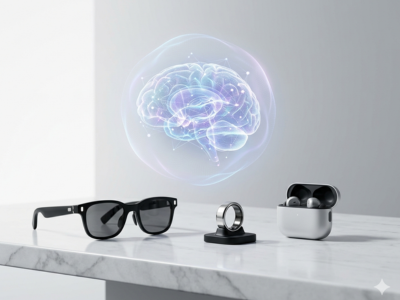
As the AI hardware ecosystem grows, we are seeing a move away from the rectangle in your pocket. Multimodal AI devices are taking new shapes, such as smart glasses that show you information or rings that monitor your stress. These new form factors require a different kind of software, one that doesn't rely on a screen. Era’s platform is built specifically for these screenless interactions, focusing on voice and environmental sensing. As these AI consumer devices become more common, the way we think about computers will change from something we use to something that simply exists around us to help when needed.
Open Ecosystem Approach Targets Developers and Creators
One of the most refreshing parts of Era’s strategy is its commitment to an open ecosystem. By holding showcases for artists and makers, they are proving that the future of AI devices shouldn't just be decided by a few giant companies in Silicon Valley. Their AI device development platform is meant to be a playground for creators, allowing anyone to build intelligent objects. This open approach encourages diversity in design and function, ensuring that we get a wide choice of devices that actually fit our lives. By making their tools available to the maker community, Era is helping to democratize the next generation of intelligent gadgets and AI.
AI Hardware Market Still Searching for a Breakout Success
It is important to remember that the AI hardware market is still very young and has faced many challenges. Some early attempts at AI consumer devices have struggled to find a solid audience or have been sold to larger companies. However, the team at Era believes that the problem hasn't been the idea of AI gadgets, but the lack of a strong, unified AI hardware and software layer. As more practical use cases emerge, like devices for meeting notes or specific health tracking, users will begin to see the true value. The market is still searching for that one breakout success, and having a reliable AI orchestration platform might be the missing piece of the puzzle.
What This Means for the Future of AI-Powered Devices
The work being done by Era marks a turning point for the future of AI devices. We are moving toward a world where technology is invisible but everywhere. By providing the software foundation for agentic AI devices, Era is making it possible for our physical environment to become smarter and more responsive. U.S. national AI strategy documents increasingly envision a future where intelligent systems are embedded, assistive, and context-aware, operating quietly in the background rather than demanding constant attention.
The goal is a more personal, private-preserving, and helpful tech experience where you have a choice over your devices again. As we look ahead, the AI gadgets platform will be the quiet engine driving a new era of innovation, where the intelligence of our gadgets is limited only by our imagination.