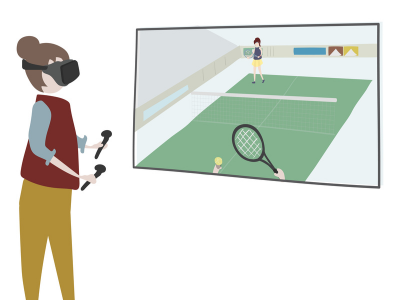

Welcome to the era where a backhand meets a headset. Squash has thrived on speed, precision, and grit. Yet the next leap might arrive through pixels, not graphite. As virtual reality moves from gimmick to gym, Squash racket design innovations are poised for a shake-up. This blog explores how VR, the metaverse, and training simulators could reshape the gear we swing. We will keep it witty, global, and grounded in real engineering logic.
Why VR Training Matters for a Fast, Tactical Sport
Squash is a game of micro-decisions made at macro speed. Players track flight paths, adjust stance, and unload shots within seconds. VR training promises repeatable, controlled drills that scale complexity without risking injury. It also offers data-rich feedback on reaction time and movement patterns.
But here is the kicker. These platforms do not just coach players. They also create testbeds for Squash racket design innovations. When athletes swing in VR, engineers can analyze grip dynamics, swing paths, and racket inertia segments. As a result, design teams gain insights that once required expensive motion labs.
Moreover, VR lowers barriers for players outside traditional hubs. A junior in Cairo could practice deception drills at home. A club player in Seoul could grind footwork sessions in a headset. Therefore, the feedback pool grows diverse and global.
From Metaverse Matches to Materials Science
The metaverse is not just an arcade. It is a giant, connected lab. When players use smart controllers or racket-shaped peripherals, developers log how they swing, how they hold, and when fatigue kicks in. Consequently, designers can explore Squash racket design innovations with real user behavior. This loop changes materials research as well. Today, frames blend carbon fiber, resin systems, and vibration dampers. Tomorrow, VR data could guide where stiffness should increase by microzones. Engineers could simulate flex profiles using digital twins of the athlete. Then they would validate those models in courts in Mumbai or Manchester.
Furthermore, the metaverse creates space for speculative prototypes. Designers could prototype “ghost” rackets that test wild weight distributions. Players could trial these models in VR before a single mold gets cut. Thus, the product cycle becomes faster, cheaper, and smarter.
Rethinking the Handle: Ergonomics in the Age of Data
VR controllers capture how players grip during fatigue or pressure. That data can reveal torque patterns that vary by hand size, sweat level, and stress. Hence, Squash racket design innovations will likely include modular handle systems. Designers might offer customizable grip cores with micro-textures mapped to the player’s palm.
Additionally, we may see:
- Adaptive grip sleeves that stiffen with heat.
- Micro-vented channels for airflow during long rallies.
- Ovalized sections that support continental or hybrid grips.
These features would evolve from thousands of VR grip profiles. As a result, even mid-range rackets could feel tailored.
String Theory 2.0: Sweet Spots and Smart Feedback
Strings matter. They shape control, power, and touch. But VR will add a new requirement: feedback. Simulator sessions thrive on real-time cues. Therefore, Squash racket design innovations might incorporate stringbed sensors or frame-mounted accelerometers. Players would see instant feedback on contact quality and swing direction.
Moreover, machine learning could recommend dynamic string tensions for different training goals. One mode might favor precision. Another could increase the trampoline effect for power sessions. While pros already fine-tune these variables, VR could democratize this knowledge at scale.
The Rise of Digital Twins: Player Models that Design Gear
Digital twins are virtual models of real athletes. They reproduce biomechanics, fatigue curves, and even joint loads. VR platforms will feed these twins with swing histories. As a result, Squash racket design innovations will reflect specific player archetypes.
Consider three archetypes:
- The explosive attacker with a short, fast swing.
- The control specialist with deep preparation and smooth acceleration.
- The all-court chameleon who blends tempo and deception.
Design teams could run simulations against these twins. Then they would optimize stiffness zones, shaft tapers, and grip lengths. Therefore, the final products would serve actual movement patterns, not generic assumptions.
Sustainability Meets Simulation: Greener by Design
The future should be lighter on the planet. VR will accelerate that trend. Engineers can test fewer physical prototypes while learning more. This approach reduces carbon footprints and material waste. It also encourages recycled and bio-based composites.
Additionally, data-driven confidence supports longer product cycles. Brands can launch fewer, better rackets with strong validation. Thus, Squash racket design innovations align with global sustainability goals. Players win. The planet breathes. The brand earns trust.
Training in the Metaverse, Competing in the Real World
There is a healthy skepticism about simulated practice. Critics say VR cannot reproduce sweat, pressure, or string feel. They have a point. However, VR does not replace the court. It complements it. It builds cognition, timing, and decision speed. Then it hands players a smarter tool for real matches.
Therefore, we will see hybrid training plans. Players will split sessions between headset drills and court reps. Coaches will use dashboards to track development across both. Meanwhile, Squash racket design innovations will translate VR insights into physical upgrades.
Personalization at Scale: From Niche to Norm
Customization used to be expensive. VR changes that. With detailed player profiles, brands can offer guided configuration. A buyer could answer a few movement-based prompts. Then the system would recommend weight, balance, and grip presets. Consequently, Squash racket design innovations become a journey, not a one-size product.
Moreover, 3D printing could support regional manufacturing models. Local hubs could produce custom grommets, caps, and even limited frame sections. This approach reduces shipping emissions and lead times. It also makes niche tweaks viable for mainstream players.
The E-Commerce Edge: Smarter Trials, Lower Returns
Buying a racket online can feel risky. VR trials reduce that anxiety. Players could swing a virtual equivalent and compare feel proxies across models. Retailers could tie those sessions to fit engines. As a result, recommendations would be more accurate, and returns would drop.
Furthermore, post-purchase training modules would coach players on optimal technique. Over time, the brand learns how users actually play. Then it feeds that intelligence back into Squash racket design innovations. The outcome is a tighter loop between usage and design.
Safety First: Protecting Joints and Preventing Overuse
VR datasets can surface the biomechanical red flags that precede injuries. Designers can tune flex or damping to cushion shock. They can reduce vibration peaks that stress the elbow. Therefore, Squash racket design innovations will target longevity as much as performance.
Additionally, training software can nudge players when technique declines. For example, it could detect late preparation or collapsing wrists. Then it could suggest drills that reduce strain. Gear and guidance would work together to keep players on the court longer.
Competitive Integrity: Keeping VR Honest
With great data comes great responsibility. Brands and leagues will need standards for sensor accuracy and privacy. They must avoid bias in algorithms that recommend gear. They also need transparent labeling for any VR-informed claims.
However, well-governed systems can benefit everyone. Players gain better tools. Engineers gain real feedback. The sport evolves without losing its soul. Meanwhile, Squash racket design innovations keep pushing performance within fair boundaries.
Final Rally: Where We Go from Here
VR will not replace the crisp sound of the ball on the strings. It will not simulate the bounce off a warm side wall. Yet it will enhance preparation in bold new ways. It will reveal how players truly move, learn, and fatigue. Consequently, it will guide Squash racket design innovations that feel intuitive in hand and fierce in play. The path forward blends craft with code. Designers will sculpt frames with human feel and machine insight. Coaches will shape tactics with data and experience. Players will train smarter and swing freer. The rally continues, only now it spans both court and console.
Game on.