
For centuries, Absinthe carried an aura of mystery, artistry, and controversy, yet modern producers now redefine its identity through innovation. Historically rooted in Europe, absinthe emerged as a botanical spirit crafted from wormwood, anise, and fennel, forming its iconic flavor. However, American distillers have recently transformed absinthe into a dynamic, experimental category that blends tradition with bold creativity. As a result, the United States has become a global leader in shaping the future of Absinthe through craftsmanship, quality, and innovation.
From Prohibition to Progressive Craft Movement
Initially, Absinthe was widely banned in Europe and the U.S. at the beginning of the twentieth century due to cultural superstitions. Absinthe's development was therefore hindered, and people kept on associating myths and falsehoods with the liquor. But when absinthe became legalized in the United States in 2007, the modern era began for distillers.
Following legalization, rather than imitating the Europeans, American manufacturers adopted a more experimental approach towards absinthe. In addition to that, they managed to combine their old traditions with innovations, thus transforming Absinthe into something completely new. This led to the development of a trend toward craft distilling in which uniqueness and authenticity were of equal importance. As a result, Absinthe regained cultural relevance and commercial appeal in contemporary markets.
Defining Absinthe Through Authentic Ingredients
At its core, absinthe remains a botanical spirit defined by its essential ingredients and meticulous distillation process. Typically, producers use wormwood, green anise, and fennel, often referred to as the "holy trinity" of absinthe. Additionally, distillers incorporate herbs and spices to create complex flavor profiles that distinguish each expression.
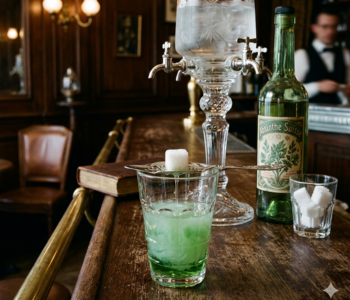
In contrast to other liqueurs, absinthe has never been connected with the presence of sugar in its ingredients, giving it a more botanical complexity and aroma. Moreover, the unique attribute of absinthe is the possibility to achieve the louche phenomenon through diluting the alcohol content with water. Therefore, absinthe becomes a perfect combination of science, artistry, and sensory experience that continues to captivate enthusiasts worldwide.
American Innovation Redefining Tradition
New production techniques have been developed by American distillers that revolutionize the way absinthes are made, served, and consumed around the world. Many companies, for example, prefer to produce absinthes based on grape brandy or fruit eau-de-vie rather than on neutral spirits. The result of such a choice is the uniqueness of every bottle of absinthe.
Moreover, the barrel-aged beverages have been invented by the Americans themselves, adding to the complexity of flavors, including vanilla, spices, and woody tastes. The method that is frequently used when making whiskey is another factor that adds to the complexity of the absinthe's flavoring palette. In addition to that, Americans add to their absinthes such botanical ingredients as hibiscus, citrus, and butterfly pea flowers. As a result, American Absinthe combines both tradition and innovation and thus appeals to customers who want unique drinks. Moreover, these new developments illustrate the power of creativity in transforming an old product into a modern masterpiece.
Craftsmanship and Quality at the Core
Quality craftsmanship is still key to the successful manufacturing of American absinthes, since manufacturers focus on producing authentic and sustainable spirits that pay attention to the details. In many cases, distilleries use the "farm-to-bottle" method, using organic herbs for their products and keeping track of all the processes involved in making the spirit. Consequently, this approach ensures consistency, purity, and a distinct sense of place within each bottle of absinthe.
Furthermore, the American distillers maintain balance in their production process, which ensures that the product is not just complex but also does not need any additional sugar or other enhancements to achieve this. This quality-oriented approach aligns with the overall trend in the craft spirits market, where both the elements of transparency and innovation create consumer confidence. The craftsmanship aspect not only defines the product but also promotes the global reputation of American absinthe.
Recognition on the Global Stage
The American brand of absinthe has been recognized globally via awards, competitions, and increased demand for it from bartenders around the world. Interestingly, some U.S. companies have received top honors at famous spirit competitions, highlighting their quality and innovation.
Further, its incorporation in the preparation of cocktails, either classic or modern, is increasingly popular. The well-known Sazerac cocktail and the newly introduced low-proof cocktails attest to the continued relevance of Absinthe in the world of cocktails. It therefore cements Absinthe as a premium beverage.
Cultural Revival and Modern Appeal
In addition to technical advances, Absinthe has been revived culturally as well, becoming more aligned with its creative history. Traditionally, absinthe has been linked to artists and thinkers as a sign of their creative spirit and rebellious nature. Today, Absinthe still carries this legacy within its modern identity.
Moreover, modern-day consumers find themselves drawn towards the tales surrounding absinthe, for example, how the beverage was transformed from an illegal status to become a cherished craft beverage. With growing interest in history and genuine products, Absinthe offers an appealing tale that can capture one's attention. Consequently, the cultural significance of the beverage enhances its appeal.
The Future of Absinthe Innovation
Looking ahead, American distillers are set to drive the trend of innovations associated with absinthe as a result of experimentation and collaboration at the international level. If consumer preferences continue to change, distillers will be keen on experimenting with new botanical ingredients, adopting new sustainable measures, and exploring new methods of aging the product. Additionally, the expansion of craft distilling networks will further strengthen knowledge sharing and creativity within the industry.
Moreover, the global market for premium spirits continues to grow, providing new prospects for further popularization of absinthe among other types of beverages. Thus, American manufacturers should be prepared to be trendsetters in this industry. Hence, the prospects of the development of Absinthe appear both dynamic and promising, driven by creativity and craftsmanship.
Absinthe has evolved from a misunderstood spirit into a symbol of innovation, craftsmanship, and cultural revival. While its origins remain rooted in Europe, American manufacturers have revolutionized Absinthe using creativity and their passion for quality. Through combining the old with the new, they have made absinthe a prestigious and versatile liquor that is recognized worldwide.
In summary, even an older brand like American Absinthe can benefit from creativity and emerge to become more innovative despite its history. With continuous evolution in the industry, absinthe will form an integral part of craft spirits, driven by creativity and a commitment to excellence.