
Broadcom and Google AI chips moved into focus this week after both companies confirmed a long-term partnership. Broadcom will develop and supply custom AI chips for Google through 2031. Broadcom Google AI chips will support next-generation AI racks designed to handle rising AI workloads. The agreement highlights growing demand for alternatives to Nvidia hardware across global tech firms.
Broadcom announced the deal on April 6, confirming plans to build future generations of custom AI chips. These chips will power Google AI racks that support advanced computing needs. Although financial terms remain undisclosed, investor confidence rose fast. Broadcom shares climbed nearly three percent in extended trading after the news broke.
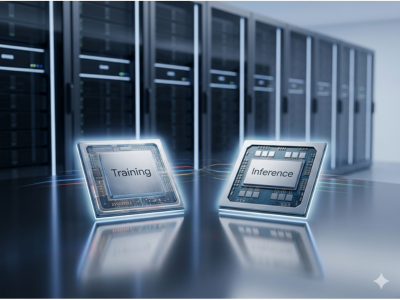
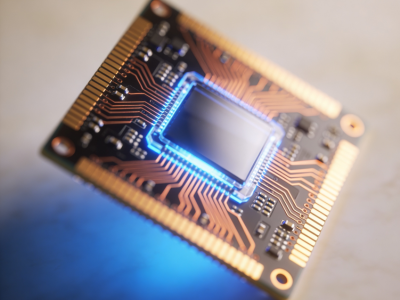
The partnership centers on custom AI chips built for Google’s specific needs. These include advanced AI processors tied to tensor processing units, also known as TPUs. Google uses TPUs widely for training and running AI models. Demand for such processors keeps climbing as cloud services expand. Therefore, the move strengthens Google’s AI infrastructure for the next decade.
Businesses increasingly seek Nvidia alternatives due to costs and supply limits. As a result, custom AI chips gained wider attention across cloud AI hardware markets. Google has pushed TPUs as a viable option for customers. TPUs already play a key role in Google Cloud growth. With Broadcom involved, Google aims to improve performance and long-term stability.
Alongside the Google agreement, Broadcom also signed a major deal with Anthropic. The AI startup will gain access to roughly 3.5 gigawatts of AI computing capacity. That capacity will rely heavily on Google AI processors starting in 2027. This move ties Broadcom into the fast-growing AI model market. Anthropic’s Claude model drives demand for large AI computing capacity.
Anthropic reported strong revenue acceleration during 2026. Its run-rate revenue now exceeds $30 billion, up from $9 billion late last year. The company trains Claude on several platforms. These include Google TPUs, Nvidia GPUs, and Amazon’s Trainium chips. However, Amazon remains Anthropic’s main cloud partner. In the middle of these announcements, the AI Chip Market continues expanding rapidly. Tech firms now invest heavily in AI chip development to secure supply. Long-term contracts help stabilize pricing and delivery. Broadcom’s strategy shows a focus on steady partnerships rather than short-term wins. This approach may shape future AI hardware supply chains.
The Broadcom-Google partnership also reflects deeper changes in AI infrastructure planning. Instead of relying on general-purpose chips, firms now prefer tailored designs. Custom AI chips help control power use and performance. They also support scaling AI workloads more efficiently. Over time, this model could reduce dependence on single suppliers.
For the United States, the impact could be significant. The deal supports domestic AI hardware supply for major cloud providers. This strengthens U.S.-based AI computing capacity amid global competition. Moreover, expanded AI infrastructure may support research and commercial projects nationwide. The agreement also aligns with Anthropic’s plan to invest $50 billion in U.S. computing infrastructure. Improved access to AI processors could accelerate development across industries. Sectors like healthcare, finance, and defense rely on reliable AI computing. As capacity grows, those sectors may see faster innovation.
Broadcom plans to build additional components beyond AI chips. These will support next-generation AI racks designed by Google. Such racks combine processors, networking tools, and cooling systems. Together, they enable large-scale AI environments. This integrated approach supports rising demand from cloud customers worldwide. Google aims to prove its AI investments generate real returns. TPU growth already boosts cloud revenue. With Broadcom’s support, Google may strengthen its position against rivals. Other cloud providers may now speed up chip partnerships of their own.
Industry observers say long-term supply deals reduce future uncertainty. Chip shortages disrupted tech markets in recent years. Therefore, secure partnerships bring stability. Broadcom benefits through steady revenue and deeper integration. Looking ahead, Broadcom Google AI chips will likely power critical AI tasks well into the next decade. The partnership signals confidence in custom AI hardware. As AI models grow larger, reliable infrastructure becomes essential. This deal shows how major players prepare for that future.