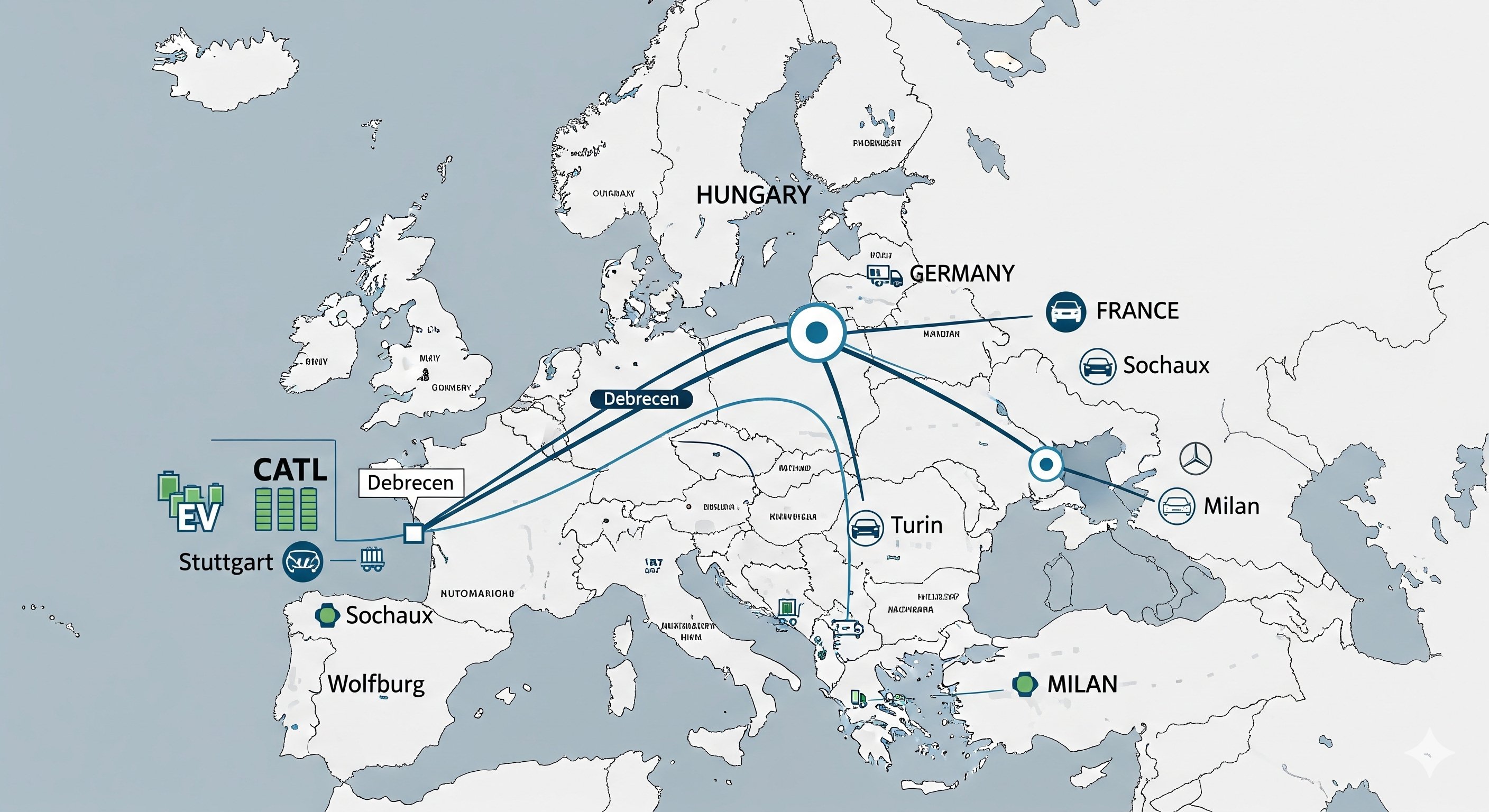

CATL’s Hungarian battery plant is scheduled to begin production in early 2026, solidifying the company’s position in the European EV market. Located in Debrecen, the facility represents a crucial step in CATL’s strategy to localize supply for electric vehicle manufacturers across Europe. Although the timeline reflects a slight delay, the project remains on track within its originally projected timeframe.
Company officials confirmed the update during the IAA Mobility show in Munich, where European operations head Matt Shen addressed the progress. He downplayed the few-month delay, stating that preparations have continued without disruption. CATL’s focus, he said, remains fixed on supporting the region’s growing demand for electric vehicle batteries.
With a €7.3 billion investment, the plant marks one of Hungary’s largest foreign-funded projects to date. CATL expects to produce up to 100 gigawatt-hours of battery cells annually once the site reaches full capacity. That output will help meet demand across both domestic and export markets.
Production from the Hungarian site will support major global automakers, including BMW, Stellantis, and Volkswagen. These companies are scaling up electric vehicle output to meet increasingly strict EU emissions regulations. By supplying batteries locally, CATL can reduce delivery times and lower costs for manufacturers operating across Europe.
Compared to CATL’s existing facility in Thuringia, Germany, the Debrecen project is far larger in scope and scale. Its higher production capacity will play a central role in streamlining EV battery supply chains across the continent. The localized approach aligns with European efforts to reduce dependency on imports and to develop clean energy infrastructure within the region.
CATL plans to create around 9,000 jobs in Hungary once the factory becomes fully operational. Beyond direct employment, the plant is expected to attract suppliers, logistics firms, and service providers. Local officials anticipate substantial growth in the area’s economy and infrastructure as a result of the project.
Hungary, in turn, offers CATL key advantages. Its central location, well-developed logistics network, and trained workforce make it an attractive destination for battery manufacturing. The country’s commitment to clean-technology investment has further aligned with CATL’s long-term sustainability goals.
CATL’s Hungarian battery plant is also a key element in the company’s broader international growth strategy. Earlier this year, CATL raised $4.6 billion through a public offering in Hong Kong. A significant portion of those funds has been allocated to construction and development in Debrecen. Company executives have confirmed that financial backing for the project remains strong.
Despite concerns over a slowdown in EV demand in some European markets, CATL remains confident. Shen acknowledged recent market fluctuations but emphasized that long-term trends continue to point toward electrification. “Electric mobility is here to stay,” he said. “We’re building the infrastructure not just for today, but for decades.”
CATL’s appearance at IAA Mobility reflects its growing influence in the global automotive supply chain. The event featured key leaders from transport and clean energy sectors. By showcasing its progress, CATL underscored its commitment to serving Europe’s transition to sustainable transportation.
As EV adoption grows, reliable battery supply becomes increasingly critical. CATL’s localized production helps OEMs meet tighter EU regulations and consumer expectations for faster delivery and lower carbon footprints. The factory is also part of CATL’s push to reduce emissions related to transportation and manufacturing processes.
Environmental performance remains a top priority for the company. CATL aims to meet its sustainability targets by minimizing logistical emissions and streamlining production. The Debrecen site will play a direct role in achieving those goals, particularly by reducing long-distance shipping needs.
In the coming years, CATL plans to continue investing in research, innovation, and infrastructure. The Hungarian battery plant stands as a symbol of that long-term commitment. With operations set to begin in 2026, CATL positions itself as a key contributor to Europe’s clean energy future.
As the EV industry matures, the importance of regional production becomes even more apparent. CATL’s Hungarian battery plant will serve not only as a manufacturing hub but also as a foundation for deeper collaboration with European partners. The move reflects both business foresight and a commitment to sustainability at scale.