
Modern medicine continues to evolve rapidly, and embolization devices stand at the forefront of minimally invasive treatment innovations today. These advanced tools allow clinicians to treat complex vascular and oncologic conditions with precision while significantly reducing patient risk and recovery time. As interventional radiology expands, embolization devices are reshaping clinical outcomes and offering an effective alternative to conventional surgical approaches.
Understanding Embolization and Its Clinical Importance
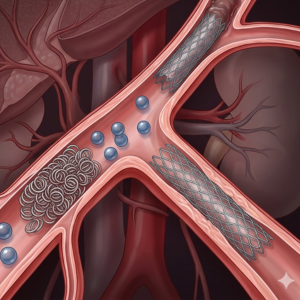
Embolization is a minimally invasive medical procedure that intentionally blocks blood flow to targeted areas within the body. Physicians commonly use embolization devices to treat tumors, aneurysms, vascular malformations, and uncontrolled bleeding with high precision. During the procedure, clinicians insert a catheter into the vascular system and navigate it toward the treatment site using imaging guidance. Subsequently, they deploy embolization devices such as coils, particles, or glue-like agents to occlude blood vessels effectively.
Therefore, embolization not only prevents abnormal blood flow but also aids in reducing tumor size, preventing hemorrhage, and stabilizing vascular abnormalities. Moreover, this targeted therapy minimizes damage to surrounding tissues, which significantly improves patient safety and therapeutic outcomes.
The Growing Burden of Brain Aneurysms
Brain aneurysms represent one of the most critical conditions where embolization devices can save lives and improve outcomes significantly. According to the Brain Aneurysm Foundation, approximately 6.8 million people in the United States live with an unruptured brain aneurysm, which equals about one in fifty individuals. Furthermore, the annual rupture rate ranges between 8 and 10 per 100,000 people, indicating a persistent clinical risk that requires timely intervention. Each year, nearly 30,000 individuals in the United States experience a brain aneurysm rupture, and one occurs approximately every eighteen minutes. Globally, brain aneurysms cause nearly 500,000 deaths annually, and notably, nearly half of these patients are younger than fifty years. Therefore, these shocking statistics emphasize the need for early diagnosis and proper use of embolization devices in preventing catastrophic outcomes.
Evolution of Embolization Devices in Modern Medicine
Over the decades, the development of embolization devices has seen tremendous improvements because of technological progress made in interventional radiology. For starters, physicians used very basic components to plug up blood vessels; currently, embolization devices comprise microcatheters, detachable coils, microspheres, and drug-coated beads. In addition, advances in imaging equipment, such as fluoroscopy and CT scans, have helped to make embolization procedures significantly more effective.
As a result, clinicians can precisely deliver embolization devices to even the smallest or most complex vascular structures. Consequently, treatment success rates have improved while complications have decreased. Further, the utilization of advanced biomaterials has improved the biocompatibility and efficiency of these devices. Thus, modern embolization devices not only provide instant closure but also ensure continuous treatment advantages in complicated cases.
Types of Embolization Devices and Their Applications
Healthcare professionals use a variety of embolization devices depending on the clinical indication and anatomical location. Each type serves a unique purpose and enhances treatment precision.
- Coils and Plugs: Physicians frequently use metallic coils and vascular plugs to achieve permanent vessel occlusion in large arteries or aneurysms. These embolization devices create a scaffold within the vessel, which promotes clot formation and blocks blood flow effectively.
- Microspheres and Particles: Microspheres and polyvinyl alcohol particles are widely used to embolize smaller blood vessels in tumor treatments. These embolization devices offer excellent versatility and can target distal vessels with remarkable accuracy. Consequently, they are commonly used in liver cancer and uterine fibroid treatments.
- Liquid Agents and Adhesives: Liquid embolic materials, like glue and alcohol, allow for the fast and lasting occlusion of pathological blood vessels. These embolization devices are particularly useful in emergency bleeding situations where immediate action is required.
- Drug-Eluting Beads: The drug-eluting beads technique incorporates both embolization and chemotherapy for the patient. This means that the advanced embolization device not only delivers drugs but also obstructs the tumor’s blood supply.
Clinical Applications Across Medical Specialties
Embolization devices have broad clinical applications across multiple specialties, making them essential tools in modern healthcare.
- Oncology Treatments: The oncology treatment catheters limit blood circulation to the tumor cells and ensure that the cells cannot grow further and reduce their size. In addition, treatments such as chemoembolization and radioembolization improve treatment efficiency through a combination of treatments.
- Management of Aneurysms and Vascular Disorders: Physicians use embolization devices in the treatment of aneurysms and arteriovenous malformations through vessel occlusion. Therefore, such interventions decrease the likelihood of aneurysm rupture and prevent life-threatening complications.
- Control of Acute and Chronic Bleeding: Embolization devices are vital tools in the management of internal bleeding, either from trauma or gastrointestinal etiology. They are also very effective in treating chronic bleeding disorders and greatly improve the quality of life.
- Gynecological and Urological Applications: Embolization devices are heavily relied upon for symptom relief in procedures such as uterine fibroid embolization and prostate artery embolization. Thus, these devices provide non-surgical options that preserve organ function and reduce recovery times.
Advantages of Embolization Devices in Patient Care
Embolization devices have many advantages that continue to drive their use in clinical practice around the world. First, these devices allow for minimally invasive surgical procedures, which are small openings as opposed to larger surgical openings. This results in less pain, minimal scarring, and faster recovery times compared to traditional surgery.
Secondly, the embolization devices provide a very targeted treatment to ensure that only the tissues to be treated are treated and healthy structures are preserved. Shorter stays in the hospital and fewer complications mean lower overall costs of healthcare and more patient satisfaction. Finally, embolization devices can be used in emergency settings to quickly stabilize patients with significant bleeding or vascular trauma. Thus, their versatility makes them a must in elective and life-saving medical procedures.
Market Growth and Future Outlook
The adoption of embolization devices continues to rise due to increasing demand for minimally invasive treatments and improved clinical outcomes. Globally, embolization procedures are performed in large numbers each year, highlighting their widespread acceptance in healthcare systems. Moreover, embolization is an important aspect of interventional radiology, highlighting the significance of embolization in contemporary medicine. With advancements in science and technology, scientists are inventing new embolization devices that have higher accuracy and drug delivery capabilities. Moreover, the utilization of AI and robots will result in improved procedure planning and execution. This means that there will be continued development of embolization devices. Thus, there will be provision of safe treatment alternatives for diverse patient populations.
What Lies Ahead
Embolization devices are revolutionizing minimally invasive procedures, offering precise, safe, and highly effective therapeutic solutions. They give doctors the ability to treat complicated conditions such as tumors, aneurysms, and bleeding disorders without the need for traditional surgery. Moreover, the evolution of embolization devices makes their applications wider and improves treatment in other medical fields. Considering the growing prevalence of blood vessel disorders like brain aneurysms, there will be more uses for embolization devices in making the practice of modern medicine and saving lives.