
Illumina, a global leader in genomic analysis technologies headquartered in San Diego, California, has launched StrataMap Spatial, an end-to-end spatial whole-transcriptome research solution designed to advance discoveries in spatial biology. The newly introduced platform delivers true single-cell resolution while providing broad transcriptomic coverage across large tissue samples. As a result, researchers can gain deeper insights into complex biological systems and disease mechanisms.
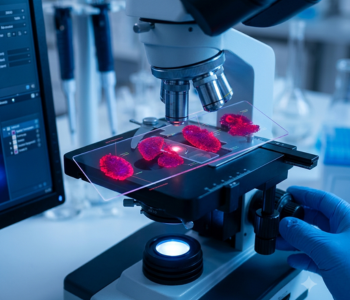
This launch is a key milestone in spatial transcriptomics, which is an emergent technology that enables scientists to visualize how gene expression levels change across tissues. StrataMap Spatial enables researchers to visualize tissue architecture, study cellular interactions, monitor disease progression, and discover drug targets with improved precision. Consequently, the solution is expected to support research across oncology, neuroscience, immunology, and developmental biology.
According to the company, StrataMap Spatial combines a large and flexible tissue capture area with unbiased whole-transcriptome profiling. Furthermore, the platform enables researchers to analyze spatial relationships among cells, tissue regions, and biological structures simultaneously. This integrated workflow provides a comprehensive understanding of tissue organization while preserving critical spatial context.
This sequencing approach can identify significantly more genes per sample compared with a lot of panel-based methods. This allows researchers to profile coding transcripts, noncoding genes, and pseudogenes, which may be difficult to identify using other techniques. These expanded detection capabilities could reveal previously hidden biological signals associated with disease progression and cellular function.
The company’s executives drew attention to the growing importance of spatial biology in modern scientific studies. They noted that spatial analysis allows researchers to understand how genetic activity influences tissue behavior within its natural environment. Furthermore, initial users of StrataMap Spatial have already applied the technology for analyzing cancer growth, tissue organization, and other biological processes.
A distinguishing feature of StrataMap Spatial is its large 7.5-square-centimeter capture area. Consequently, researchers can analyze multiple fresh frozen tissue sections simultaneously while generating highly detailed multidimensional tissue maps. The platform also supports a broad range of eukaryotic tissue samples and remains compatible with varying tissue sizes, shapes, and RNA quality levels.
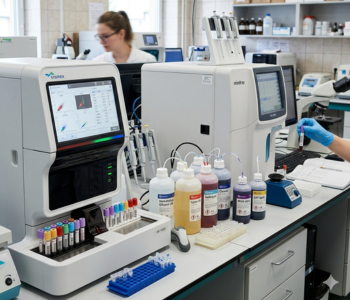
In addition, StrataMap Spatial integrates seamlessly with existing histopathology workflows. Instead of requiring specialized instrumentation, laboratories can utilize the solution alongside established sequencing platforms already deployed in many research environments. As a result, organizations can expand their spatial biology capabilities without making substantial infrastructure investments.
The company also emphasized the platform's scalability and efficiency. StrataMap Spatial can analyze more than 2,000 samples annually and can analyze multiple slides in parallel. Meanwhile, sequencing can be performed in approximately 22 hours. From sample preparation to imaging, sequencing, and downstream analysis, researchers can go from sample to actionable insight in less than five days.
The initial assessments by researchers have shown promising results. Scientists have used StrataMap Spatial to create detailed three-dimensional maps of tissue and to analyze difficult biological samples with greater sensitivity. Investigators also believe the technology could help scientists to get a better understanding of tumor microenvironments, immune responses, and other key disease-related processes.
StrataMap Spatial connects with a broader bioinformatics ecosystem that supports advanced data interpretation. The solution incorporates analytical workflows for tissue visualization, clustering refinement, biological annotation, and multiomic integration. Consequently, researchers can combine transcriptomic findings with genomic, epigenetic, and proteomic information to achieve a more comprehensive understanding of biological systems.
The launch arrives as demand for spatial biology technologies continues to grow among academic institutions and biotech and pharma organizations. More and more, researchers are looking for solutions that provide high sensitivity, broad coverage of tissue, and scalable workflows without compromising data quality. Therefore, StrataMap Spatial is well positioned to respond to new needs in the growing spatial transcriptomics market.
Looking ahead, the company plans to continue to build out the StrataMap Spatial portfolio. Work is underway to allow support of other tissue sample formats such as formalin-fixed paraffin-embedded tissues. These coming developments will make it available to more people and open up new possibilities to researchers around the world.
StrataMap Spatial further enhances Illumina's spatial biology portfolio and provides researchers with a valuable tool to perform whole-transcriptome studies. As spatial analysis becomes increasingly important in biomedical discovery, the platform may help accelerate breakthroughs in disease research, biomarker identification, and precision medicine development.