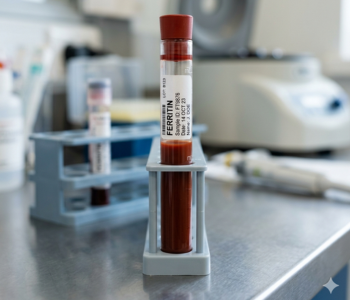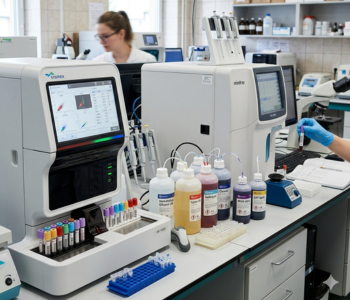

Blood testing serves as a cornerstone of modern healthcare. Physicians depend on accurate laboratory results to diagnose diseases, monitor therapies, and assess patient health effectively. Consequently, advancements in hematology analyzers and reagents have transformed diagnostic laboratories worldwide. These technologies improve efficiency, enhance accuracy, and support faster clinical decision-making.
As healthcare systems continue evolving, laboratories increasingly adopt automated solutions that deliver dependable results with minimal manual intervention. Therefore, hematology analyzers and reagents play a vital role in meeting the growing demand for advanced diagnostic services.
Understanding Hematology Analyzers and Reagents
Hematology analyzers and reagents are essential components of blood testing laboratories. Hematology analyzers are sophisticated instruments that evaluate blood samples and measure critical blood parameters. These measurements include red blood cells, white blood cells, platelets, hemoglobin, and hematocrit levels. Meanwhile, reagents are specialized chemical solutions that enable analyzers to identify, count, and classify blood cells accurately.
Together, these technologies provide healthcare professionals with comprehensive insights into a patient’s hematological health. As a result, clinicians can diagnose conditions earlier and develop effective treatment strategies. Moreover, modern analyzers perform multiple tests simultaneously. Therefore, laboratories can process higher sample volumes while maintaining excellent accuracy and consistency.
Rising Burden of Blood Disorders Drives Market Growth
The growing prevalence of hematologic diseases significantly increases the demand for advanced diagnostic solutions. Blood disorders require continuous monitoring and accurate testing to support timely treatment decisions. Consequently, healthcare facilities increasingly rely on hematology analyzers and reagents to manage patient care effectively. According to the Centers for Disease Control and Prevention, approximately 12 out of every 100,000 males in the United States have hemophilia, and nearly 400 boys are born with hemophilia A annually. Additionally, the Leukemia & Lymphoma Society reports that one person in the United States receives a diagnosis of leukemia, lymphoma, or myeloma every three minutes.
Furthermore, an estimated 184,720 people were expected to receive diagnoses of leukemia, lymphoma, or myeloma during 2023. These blood cancers were projected to account for 9.4% of the approximately 1.96 million new cancer cases diagnosed during the same year. The increasing incidence of blood-related diseases continues driving demand for blood transfusions, blood cell counting, and routine hematological monitoring. Consequently, healthcare providers require reliable hematology analyzers and reagents to support accurate diagnosis and disease management. This growing disease burden remains a major factor accelerating market expansion globally.
Why Hematology Diagnostics Matter More Than Ever
Healthcare providers increasingly emphasize early disease detection and preventive care. Therefore, accurate blood testing has become more important than ever. Routine blood analysis helps identify infections, anemia, blood cancers, clotting disorders, and immune system abnormalities before symptoms worsen. Additionally, physicians use hematology testing to monitor treatment effectiveness and evaluate disease progression. Consequently, laboratories require advanced diagnostic systems capable of delivering rapid and dependable results.
Furthermore, populations and rising rates of chronic disease continue to challenge volumes globally. Thus, the demand for efficient hematology analyzers and reagents is growing in hospitals, diagnostic laboratories, and research facilities.
Automation Is Transforming Laboratory Operations
Automation represents one of the most important advancements in hematology diagnostics. Traditional blood test techniques often involved extensive manual handling, which increased the likelihood of human error. However, the modern hematology analyzer and reagents automate the essential testing steps and improve the laboratory workflow. These automated systems support automated processes for sample preparation, counting, classification, and reporting of results, achieving greater uniformity and reducing turnaround times in laboratories.
Moreover, automation supports high-throughput testing environments where thousands of samples require processing daily. Therefore, healthcare organizations can remain productive without a reduction in diagnostic performance. In response to growing testing demand, clinical labs have turned to automated systems in order to enhance laboratory efficiency and enhance clinical quality.
Artificial Intelligence Improves Diagnostic Precision
Artificial intelligence is becoming an important component of modern laboratory medicine. Advanced hematology analyzers and reagents increasingly integrate AI-powered technologies that assist with blood cell recognition and abnormality detection. These intelligent systems analyze large datasets rapidly and identify subtle cellular changes that may indicate disease. As a result, healthcare professionals receive more accurate diagnostic information.
Machine learning also improves consistency within laboratory workflow and reduces variation in interpretation. The introduction of artificial intelligence in analyzer machines will also ensure proper clinical decision-making and, hence, improved patient outcomes. With continuing technological advancements, artificial intelligence will contribute immensely to lab automation and hematology analysis.
Growth of Point-of-Care Testing
Medical providers are increasingly seeking diagnostic solutions that can deliver rapid results close to the patient. Consequently, there has been much interest in point-of-care hematology testing in healthcare settings. Portable hematology analyzers enable clinicians to run blood tests in emergency departments, outpatient clinics, and remote healthcare facilities. This allows physicians to make faster treatment decisions without waiting for processing by central laboratories.
Point-of-care testing also improves access to care in underserved and rural areas. Early diagnosis and timely clinical intervention are beneficial for patients. Point-of-care technologies will further boost the hematology analyzers and reagents market as healthcare systems target convenience and efficiency.
Expanding Applications Across Healthcare
The applications of hematology analyzers and reagents extend beyond routine blood testing. Today, these technologies support numerous medical specialties and healthcare environments. For example, oncology centers use hematology analyzers to monitor blood cell counts during chemotherapy treatments. Similarly, blood banks depend on these systems to evaluate donor blood quality and ensure transfusion safety.
Hematology tests are used in emergency departments for rapid detection of infections, sepsis, and injury-related disorders. Meanwhile, pediatric specialists use blood analysis to monitor anemia and developmental health conditions. Moreover, medical research organizations are increasingly using advanced hematology instruments to study disease processes and innovate treatment methods. Thus, the flexibility of these machines continues to enhance their importance across healthcare.
Innovation in Reagents and Diagnostic Technologies
Manufacturers are still developing sophisticated reagents that increase testing accuracy and lab efficiency. Modern reagent formulations assist in cell differentiation and can be utilized to obtain meaningful results with enhanced sample stability. Also, companies are investing in environmentally responsible reagent solutions in line with sustainability goals. These innovations allow laboratories to cut waste without sacrificing diagnostic quality. Emerging technologies also integrate digital imaging, artificial intelligence, and advanced analytics with traditional hematology testing. This hints that future diagnostic platforms might be even more accurate and clinically useful.
Future Outlook for Hematology Diagnostics
The future of hematology analyzers and reagents remains highly promising. Laboratory capabilities will continue to improve with advances in automation, artificial intelligence, digital diagnostics, and point-of-care testing. In addition, with greater healthcare expenditure, an increasing population, and increased cases of blood disorders, market growth will be supported. Healthcare service providers are becoming more aware of the benefits of advanced hematology technologies in delivering timely and accurate diagnoses. As laboratories strive for greater efficiency and precision, innovative hematology solutions will remain indispensable components of modern healthcare systems.