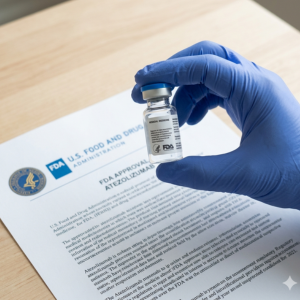

The United States Food and Drug Administration announced that it approved atezolizumab for adjuvant treatment of muscle-invasive bladder cancer. This decision introduces atezolizumab as a precision immunotherapy designed specifically for patients who show molecular evidence of residual disease after surgery.
According to the American Cancer Society, bladder cancer remains a significant public health concern, especially among men in the United States. The organization estimates about 84,530 new bladder cancer cases in 2026, including 64,730 men and 19,800 women. Furthermore, approximately 17,870 deaths may occur, including 12,640 men and 5,230 women, highlighting a substantial disease burden nationwide.
Specifically, regulators authorized atezolizumab for adult patients with muscle-invasive bladder cancer who have circulating tumor DNA molecular residual disease following cystectomy. Moreover, the FDA approved atezolizumab combined with hyaluronidase, thereby expanding treatment delivery options while maintaining strong clinical effectiveness for eligible patients. Additionally, the agency approved the Signatera CDx assay to identify patients who may benefit from atezolizumab therapy.
Notably, atezolizumab acts against programmed death ligand 1 proteins, allowing the immune system to identify and kill cancer cells efficiently. Consequently, atezolizumab helps eliminate microscopic disease that remains undetected through standard diagnostic imaging approaches after surgical intervention. Therefore, atezolizumab reflects a major shift toward biomarker-driven oncology, focusing treatment decisions on molecular evidence rather than conventional staging methods.
Muscle-invasive bladder cancer remains aggressive, and recurrence frequently occurs even after radical cystectomy and conventional therapeutic interventions in clinical practice. However, atezolizumab takes a precision medicine approach, detecting molecular residual disease with the use of circulating tumor DNA testing after surgery. This enables physicians to administer atezolizumab selectively to patients with the highest risk for recurrence, avoiding unnecessary administration to others.
The FDA based its approval on the phase 3 IMvigor011 clinical trial, which evaluated atezolizumab compared with a placebo among eligible participants. In this randomized double-blind study, investigators enrolled patients who tested positive for circulating tumor DNA following bladder removal surgery. Subsequently, researchers assigned participants to receive atezolizumab therapy or a placebo over a treatment period lasting up to one year.
The trial demonstrated that atezolizumab significantly improved outcomes, offering meaningful clinical benefits for patients with detectable molecular residual disease after a cystectomy. Specifically, atezolizumab reduced the risk of disease recurrence or death by 36 percent compared with placebo treatments. Furthermore, atezolizumab decreased the risk of death by 41 percent, highlighting its potential impact on long-term survival improvement.
Median survival without disease was observed to be 9.9 months in atezolizumab patients, while those who received a placebo had 4.8 months. Median survival was also higher for patients who received atezolizumab as compared to placebo treatments (32.8 months vs. 21.1 months). This indicates that atezolizumab does improve outcomes significantly in carefully selected bladder cancer cases.
The safety profile of atezolizumab was aligned with prior clinical trials, and no unforeseen adverse outcomes were reported in the evaluation process of the trial. Nevertheless, atezolizumab administration could lead to the emergence of adverse outcomes, including urinary tract infection, rash, hypothyroidism, and constipation during treatment cycles. Additionally, physicians must carefully monitor immune-mediated complications associated with atezolizumab, which can affect organs such as the lungs, liver, and thyroid.
Importantly, this is the first regulatory approval of a circulating tumor DNA-guided therapeutic approach in the practice of bladder cancer management. In the past, clinicians relied on imaging and pathologic staging, which in many cases only detected recurrences in affected patients after substantial tumor progression. By contrast, atezolizumab allows for the possibility of early therapeutic intervention based on molecular signals, which may improve outcomes for high-risk individuals.
Experts believe atezolizumab could transform post-surgical care by aligning treatment strategies with individual patient risk profiles and molecular characteristics. Additionally, the inclusion of sophisticated diagnostic methods ensures that atezolizumab is delivered to those who stand to gain more from immunotherapy treatments. The FDA approval of atezolizumab marks another breakthrough in precision medicine, providing increased chances of survival and lowered recurrence rates for individuals with bladder cancer. As the incidence and mortality rates continue to pose a problem in society today, this medication emerges as an effective treatment choice for cancer care.