
The search for more power in the tech world has moved from software code to the physical silicon inside servers. Recent reports suggest a massive shift in the industry as Google's AI chips strategy enters a new chapter through a potential Marvell Technology partnership. For years, the world has relied on general-purpose processors, but the demands of modern artificial intelligence are simply too high for standard hardware. Google is now looking to build custom AI processors that are tailored specifically for its own massive data centers. This isn't just about making things faster; it is about creating a specialized foundation that can handle the complex thinking required by AI. By taking control of its own hardware, Google is positioning itself to lead the next wave of AI hardware innovation.
U.S. Tech Giants Accelerate Custom Silicon Race
The Data Center Chip Market in the United States is undergoing a rapid transformation as domestic giants move away from off-the-shelf components toward a strategy of total hardware customization. This trend highlights an aggressive expansion where U.S. market leaders are investing heavily to reduce dependency on external supply chains and lower the substantial energy costs associated with artificial intelligence. By developing custom AI processors locally, these firms ensure that the primary theatre for hardware innovation remains centered in Silicon Valley. Currently, the U.S. maintains dominance with the largest share in the high-end semiconductor design market, which remains vital for maintaining a competitive edge in global cloud infrastructure.
Google Explores New AI Chip Partnership with Marvell Technology
The talks between Google and Marvell Technology suggest a powerful alliance aimed at tackling the most difficult problems in AI chip development. Marvell is a veteran in the semiconductor industry AI space, known for helping companies turn complex ideas into working silicon. By joining forces, they hope to finalize the design of new hardware as soon as next year. This partnership is a clear signal that Google wants to move beyond being just a software company. They are becoming a hardware powerhouse to support their Google cloud AI growth. Working with a partner like Marvell allows Google to scale its custom silicon strategy much faster than it could alone, ensuring they have the right tools for the next decade of computing.
Custom Chips Aim to Boost AI Model Efficiency
One of the biggest hurdles in artificial intelligence today is how much energy it consumes. Every time you ask an AI a question, a chip in a data center has to do a massive amount of work. The new Google AI chips are being designed with AI computing efficiency as a top priority. By creating custom AI processors, Google can strip away the features they don't need and focus entirely on what makes AI run smoothly. This leads to AI hardware innovation that uses less power and generates less heat, which is essential for scaling up cloud AI infrastructure. For the end user, this means faster response times and more reliable AI services, all while being more environmentally friendly.
Memory Processing Unit Could Transform AI Workloads
A key part of the reported deal is the creation of a brand-new memory processing unit AI. In the past, the brain of the computer often had to wait for data to move from the memory, creating a bottleneck that slowed everything down. This new unit is designed to work directly with Google’s existing hardware to speed up how data is handled. This is a significant piece of next-gen AI hardware because it addresses the traffic jams that happen inside a computer during large-scale AI clusters operations. By optimizing how memory is processed, Google can ensure that its systems are always running at peak performance, making it easier to train even larger and more complex AI models.
Next-Gen TPU Designed for Advanced AI Inference
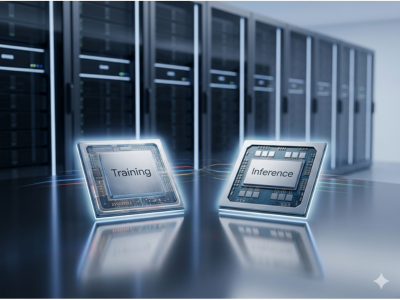
In addition to the memory unit, Google is reportedly working on a new version of its Tensor Processing Unit (TPU). While the original TPUs were great for training models, this new version is focused on AI inference optimization. Inference is the part where the AI actually provides an answer to a user's query. As more people use AI in their daily lives, the demand for fast, efficient inference is skyrocketing. This next-gen AI hardware is being built to handle these specific AI task execution needs with incredible speed. It is a major step forward in machine learning hardware that will make AI feel more instant and natural for billions of users across the globe.
Google Expands Push Beyond NVIDIA GPUs
For a long time, Nvidia has been the undisputed king of the AI chip market, with its GPUs powering almost every major AI project. However, Google is making it clear that they want more options. By developing their own Google AI chips, they are creating a viable alternative to Nvidia GPU competition. This doesn't mean they will stop using other chips, but it gives them a plan B and more bargaining power. It also allows them to optimize their software to run perfectly on their own custom AI processors. This move toward independence is a major trend in the semiconductor industry AI sector, as companies look to protect themselves from supply shortages and high costs.
AI Chip Strategy Becomes Key to Cloud Growth
The success of Google's cloud business is now directly tied to its custom silicon strategy. When companies choose a cloud provider, they look for the best performance at the lowest price. By using their own data center AI chips, Google can offer unique features and better pricing than competitors who have to buy all their chips from third parties. This Google cloud AI growth is a major factor in keeping investors happy, as it shows that the billions spent on AI research are leading to real-world business advantages. The hardware and software are becoming so tightly linked that you can't have one without the other, making AI hardware innovation a cornerstone of the modern internet.
Future Outlook for AI Chip Innovation and Competition
The future of semiconductor innovation is defined by an accelerating cycle of development, where strategic partnerships, such as the recent collaboration between Google and Marvell to engineer memory processing units and next-generation Tensor Processing Units, signal a major industry shift toward customized solutions. This evolution is moving away from multipurpose components toward highly specialized surgical tools designed for precise tasks like linguistic recognition, video generation, and autonomous navigation. To ensure operational autonomy and mitigate the high costs of third-party hardware, technology leaders are increasingly developing internal data center chips. Furthermore, the integration of artificial intelligence into the design process is drastically reducing the duration between conceptualization and manufacturing, while a rigorous global pursuit of domestic production continues to drive substantial infrastructure investments.