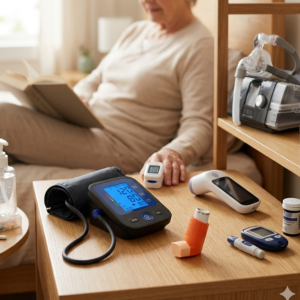

Healthcare is transforming rapidly, and home medical devices are leading this revolution by bringing essential care directly into patients’ homes. Today, patients increasingly rely on advanced technologies that enable consistent monitoring and treatment without visiting hospitals frequently. As a result, healthcare systems are shifting toward patient-centered models that emphasize convenience, accessibility, and improved clinical outcomes.
Understanding Home Medical Devices
Home medical devices refer to tools designed for safe and effective use in non-clinical environments, particularly within domestic healthcare settings. These devices support monitoring, diagnosis, treatment, and rehabilitation, allowing patients to manage their conditions independently and effectively. Moreover, modern home medical devices prioritize portability, user-friendly interfaces, and digital connectivity, which significantly enhance usability and patient engagement. Consequently, healthcare providers can remotely monitor patients and ensure timely interventions without requiring physical visits to healthcare facilities.
Rising Burden of Chronic Diseases
The adoption of home medical devices is driven significantly by the increasing prevalence of chronic diseases across populations worldwide. An estimated 129 million people in the United States have at least one major chronic disease, including heart disease, diabetes, obesity, and hypertension. Therefore, policymakers and healthcare providers must prioritize innovative strategies to reduce chronic disease burden and improve long-term outcomes for affected populations. In this context, home medical devices play a crucial role by enabling continuous monitoring and proactive management of these conditions.
Key Types of Home Medical Devices
Healthcare innovation has produced a wide range of home medical devices designed to meet diverse patient needs across various conditions.
Monitoring Devices
The monitoring devices provide the basis for home healthcare devices, allowing patients to continuously monitor their vital signs, thus identifying any deviations. These include blood pressure monitors, thermometers, pulse oximeters, and wearable trackers that provide accurate real-time data. Additionally, glucometers allow patients with diabetes to monitor blood glucose levels consistently, thereby improving overall disease control and reducing complications.
Diagnostic Devices
Diagnostic home medical devices make it possible for people to diagnose some illnesses without frequent hospital visits, ensuring faster decision-making and treatment initiation. These devices provide fast results, enabling patients to obtain expert advice at once if needed. Furthermore, early diagnosis through these tools helps prevent disease progression and reduces the risk of severe complications over time.
Therapeutic Devices
Therapeutic home medical devices play a crucial role in managing treatment and recovery in a home-based environment, particularly for chronic and respiratory conditions. Devices such as nebulizers, oxygen concentrators, and infusion pumps enable consistent treatment without hospitalization. As a result, patients experience improved adherence to therapy and reduced dependency on healthcare facilities for routine care.
Mobility and Assistive Devices
Mobility aids constitute yet another important class of home medical equipment since they increase independence and greatly improve the quality of life of individuals. These include wheelchairs, walkers, and assistive equipment designed to support safe movement and daily activities. Therefore, patients regain confidence and reduce reliance on caregivers, promoting a more autonomous lifestyle.
Remote Patient Monitoring Devices
Remote monitoring systems are transforming the field of home medical devices since they are capable of transmitting data in real time between the patient and the health care provider. These include advanced blood pressure monitors, glucose monitors, and ECG wearables, which enable continuous supervision and timely clinical decisions. Consequently, healthcare professionals can detect potential issues early and intervene before complications arise.
Benefits of Home Medical Devices
The increasing use of home medical devices reflects their ability to enhance healthcare efficiency and patient satisfaction in multiple ways.
- Improved Convenience: Home medical devices allow patients to receive healthcare within their homes, reducing the need for frequent visits to healthcare facilities. This convenience is especially important for the elderly and patients with limited mobility or chronic illness.
- Enhanced Patient Independence: These devices empower patients to take charge of their health by enabling them to monitor and manage conditions on their own. Home medical devices allow individuals to be actively involved in their own health care journey, increasing engagement and adherence to treatment.
- Better Chronic Disease Management: Given the rising prevalence of chronic diseases, home medical devices play a vital role in ensuring consistent monitoring and treatment of long-term conditions. Home medical devices enable patients to keep their health parameters stable and improve overall outcomes through continuous care.
Technological Advancements Driving Growth
Technological innovation continues to enhance the functionality of home medical devices, making them more efficient, accessible, and reliable for everyday use. Firstly, the adoption of digital platforms and connected technologies allows for the easy exchange of data between patients and healthcare providers. This technology helps in ensuring that there is accuracy in monitoring and decision-making within the health sector.
Secondly, developments in AI technology and wearable technology have increased the effectiveness of home-based medical device diagnostics and predictions. These technologies are responsible for the early diagnosis of any health-related issues and customized treatments. Additionally, smart sensors and mobile applications are making it easier for patients to incorporate health monitoring into their daily routines seamlessly.
Market Growth and Future Outlook
The global demand for home medical devices continues to grow due to increasing healthcare needs and shifting patient preferences toward home-based care solutions. According to The Insight Partners, the home medical devices market will reach US$86.70 billion by 2034, driven by rising healthcare demand. The increasing number of cases of chronic diseases, aging population, and healthcare costs have led to the increased adoption of these devices in developed as well as emerging markets. Consequently, these medical devices have become essential parts of the healthcare system today. Moreover, innovations in telemedicine and remote monitoring technologies will further boost the development of home medical devices.
Strategic Outlook
Home medical devices are revolutionizing healthcare by improving patient care, convenience, and access in ways that were never possible before. These devices allow people to conveniently monitor, manage, and treat health conditions from the comfort of their homes. Moreover, the increasing burden of chronic diseases underscores the importance of embracing these technologies to improve long-term health outcomes. With the innovation continuing, home medical devices will have an even greater role in the future of healthcare delivery. Ultimately, home medical devices empower patients with control and a proactive approach to care, resulting in a more effective, patient-centric health system that focuses on quality and convenience.