
In today’s design world, the fabric industry embraces innovative materials, and one standout is neoprene. Manufacturers and designers turn toward neoprene because it delivers durability, insulation, and versatility for a wide array of applications. Meanwhile, users appreciate the high performance it brings to sports, apparel, and protective gear. In this article, I explore what neoprene fabric is, how it’s made, its benefits and drawbacks, typical applications, and its environmental footprint, so you can make an informed choice for your next project.
What is Neoprene Fabric?
Neoprene is a synthetic rubber material originally developed as a substitute for natural rubber, particularly during periods of shortage and industrial demand. Unlike typical woven fabrics, neoprene is produced not as yarns but as foamed sheets, then covered with textiles or used in laminate form for clothing and gear.
The process begins with polymerizing raw chloroprene, mixing additives to tune flexibility, insulation, and thickness, and then baking the material into solid sheets. After slicing the foam into usable thicknesses, manufacturers bond fabric facings or incorporate textile layers depending on the end-use. Because of its foam structure and closed-cell nature, neoprene offers distinct performance features compared with standard fabrics.
Key Benefits of Neoprene Fabric
First and foremost, neoprene delivers water resistance and insulation. Its closed-cell foam structure prevents water ingress and helps retain heat, making it ideal for wet or cold-weather applications. Moreover, neoprene remains flexible over a wide temperature range, and it resists environmental factors like UV light, ozone, and chemicals. It also exhibits good elasticity, allowing garments or gear to move with the body while still offering structural support.
Because of its unique properties, neoprene is extremely versatile: you’ll find it in wetsuits, sports accessories, outerwear, backpacks, protective sleeves, and industrial applications. For a design-oriented professional, neoprene opens a world of creative possibilities — you can shape it, bond it, cut it thick or thin, and integrate it into a product for both function and form.
Trade-Offs and Limitations to Consider
While neoprene has many strengths, it also comes with important limitations that designers must weigh. One of the most cited drawbacks is its lack of breathability due to the closed-cell foam structure, which tends to trap heat and moisture against the skin in warm environments. Its cost is higher compared with many common synthetic fabrics, owing to its specialized production process and material quality. Additionally, neoprene has limited resistance to certain chemical exposures and can degrade under prolonged UV exposure or compression set in demanding mechanical applications.
From an environmental perspective, neoprene is derived from petrochemicals, is generally not biodegradable, and recycling remains a challenge. Thus, when choosing neoprene, you must balance its performance benefits against cost, comfort, maintenance, and sustainability.
Typical Applications of Neoprene Fabric
Thanks to its combination of waterproofing, insulation, and elasticity, neoprene sees extensive use across a variety of categories:
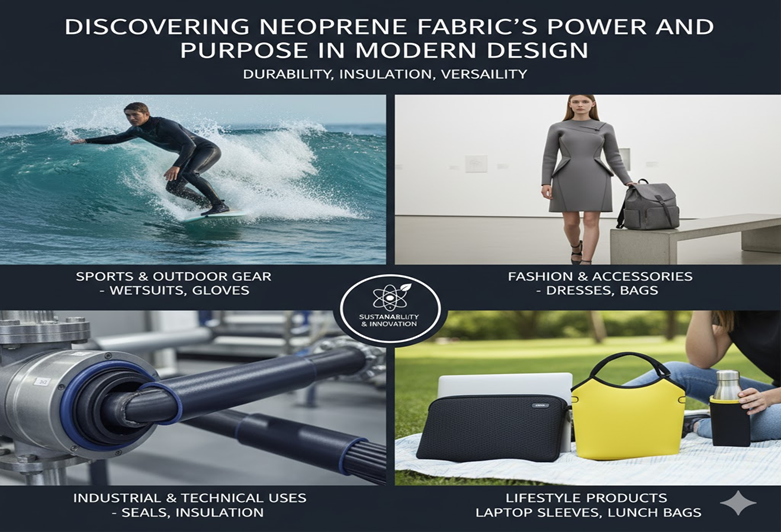
- Sports & outdoor gear: wetsuits, gloves, boots, knee pads, and protective apparel rely on neoprene’s ability to insulate and flex.
- Fashion & accessories: designers create structured dresses, bags, and sleeves using neoprene to achieve a contemporary, sculptural look while retaining comfort.
- Industrial & technical uses: Neoprene serves as gaskets, seals, insulation layers, and protective sleeves where chemical and temperature resistance is required.
- Lifestyle products: laptop sleeves, lunch bags, neoprene-lined backpacks, or straps exploit its protective and shock-absorbing qualities.
By aligning neoprene’s properties with the functional demands of the product, you can unlock the material’s full potential — whether ensuring warmth in cold water, durability in rough conditions, or a sleek look in everyday carry.
Environmental & Sustainability Considerations
As designers increasingly seek sustainable materials, neoprene presents a mixed picture. On one hand, it offers long service life, reducing frequent replacements, but on the other, its origin from petroleum and limited recyclability pose environmental challenges. Some manufacturers are developing eco-friendly neoprene alternatives or modified materials, such as bio-based foams, to mitigate issues.
If your project prioritizes sustainability, consider specifying these variants or exploring materials with a more favorable life-cycle profile. When evaluating neoprene, ask: what happens at the end of life? How easily can the product be recycled or repurposed? Are there certifications about chemical use and emissions? Addressing these questions enhances responsible design and consumer perception.
How to Choose the Right Neoprene Grade
Selecting the right type of neoprene fabric requires matching thickness, stretch, finish, and coating to your product’s demands. For wearable gear, thinner foam may provide flexibility and lightness, while thicker sheets offer greater insulating or shock-absorbing capability. Because neoprene resists water and chemical exposure, outdoor applications may require specific UV or abrasion ratings.
If comfort and breathability matter, consider neoprene variants that incorporate mesh facings or perforation to allow airflow. Clearly define required properties such as tensile strength, elongation, compression set, temperature range, waterproofing, and chemical resistance. This ensures the material grade suits both performance and manufacturing constraints.
Practical Tips for Working with Neoprene Fabric
Start by ordering samples and testing for your specific use case, including sewability, bonding, and durability under real-world conditions. Adhesives, coatings, and seams must be chosen carefully to avoid delamination or breakdown, especially when combining neoprene with other materials.
When sewing, use stretch needles, low-tension threads, and stabilize edges, as some stitching can cause puckering or thread breakage on neoprene. Consider care and maintenance: rinse products after salt or chemical exposure, dry thoroughly, and store flat or rolled to avoid permanent compression. Awareness of these details significantly enhances product longevity.
Conclusion
Neoprene fabric stands out as a high-performance material offering water resistance, insulation, elasticity, and durability, making it ideal for gear, apparel, and high-function products. At the same time, it requires thoughtful specification, mindful of breathability, cost, environmental impact, and handling.
By selecting the right grade, working closely with suppliers, testing under real-world conditions, and considering end-of-life implications, you can harness neoprene’s strengths while navigating trade-offs. Whether for technical gear or creative lifestyle products, neoprene delivers when performance and design converge.