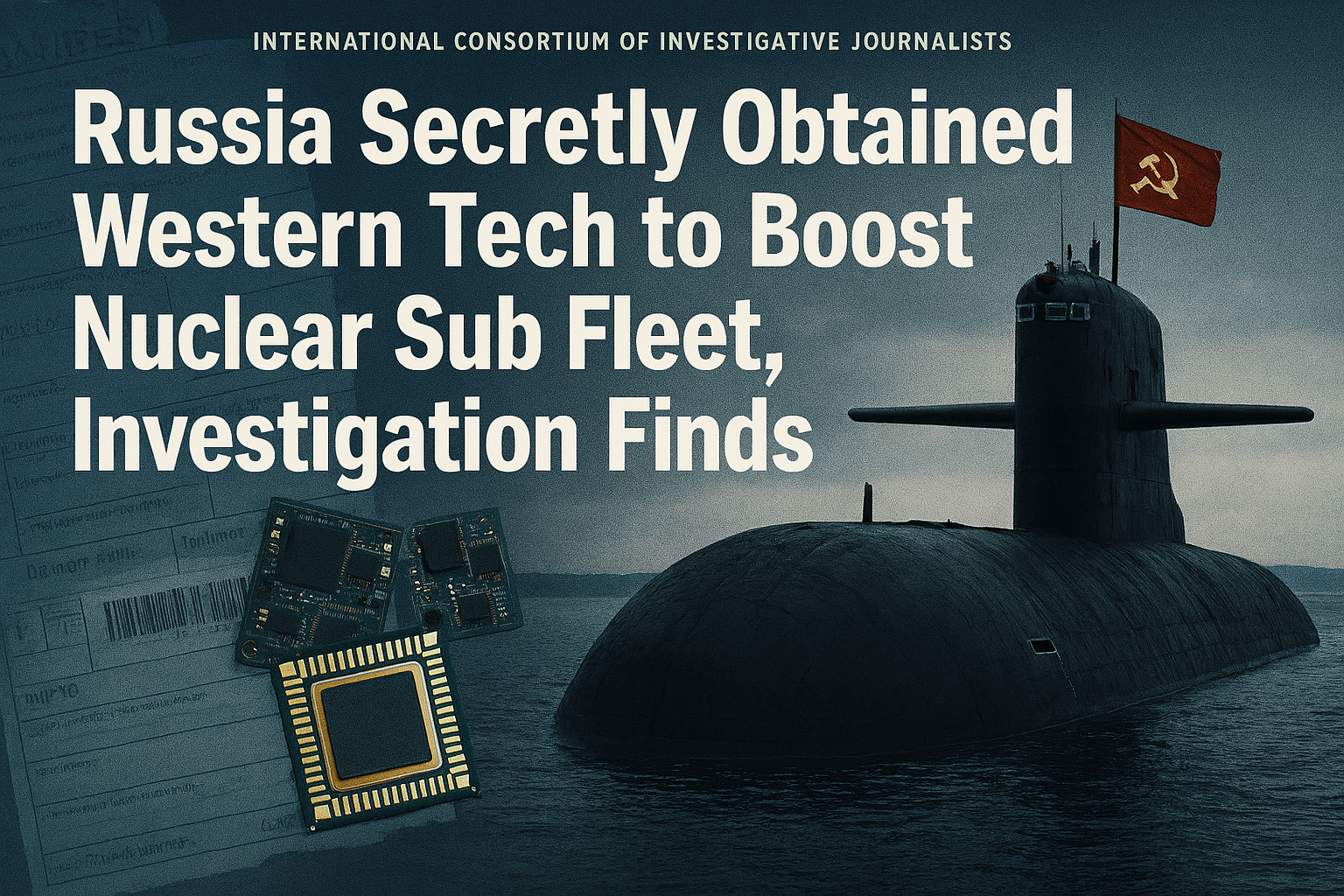

An international investigation has uncovered that Russia secretly obtained Western technology to upgrade its nuclear submarine fleet. The report, conducted by the International Consortium of Investigative Journalists (ICIJ), details a hidden network that circumvented global sanctions. According to the findings, Russia acquired essential components that allowed its nuclear submarine systems to remain operational despite trade restrictions. Experts warn that this covert acquisition may affect global security and highlight weaknesses in export controls.
The investigation tracked shipments, contracts, and financial flows through multiple shell companies. These firms appeared legitimate, but investigators found they masked their true purpose. They purchased advanced microelectronics, sensors, and navigation systems crucial for nuclear submarine functionality. Although declared as civilian-use equipment, the components ultimately reached Russia’s military industry. This discovery demonstrates the challenge of regulating dual-use technology that serves both civilian and military purposes.
Western technology suppliers claimed they were unaware of any misuse. Many insisted that sales followed proper licensing procedures. However, the investigation revealed that complex supply chains allowed intermediaries to obscure end users. Consequently, critical materials were funneled to Russia without triggering alarms. This case emphasizes the difficulty governments face when controlling sensitive technological exports.
Nuclear submarine operations are a core element of Russia’s strategic deterrent. These vessels provide mobility, stealth, and second-strike capability. Maintaining them requires advanced components and continuous technical upgrades. After Western sanctions limited access to key systems in 2014, Russia faced challenges maintaining its fleet. Nevertheless, the investigation shows that the nation successfully obtained vital technology through covert channels.
ICIJ reporters examined customs documentation, shipping records, and leaked communications from multiple countries. They discovered that intermediaries in Turkey, the UAE, and Hong Kong played crucial roles. These companies bought high-performance electronics from Western suppliers and misclassified them as harmless industrial products. Subsequently, the materials were redirected to Russia, supporting nuclear submarine maintenance and modernization efforts.
Experts argue that these practices weaken international non-proliferation regimes. By obtaining restricted technology, Russia gains a strategic advantage that could shift maritime security calculations. Export control agencies rely on documentation, yet falsified records and opaque logistics often conceal illicit transfers. Therefore, enforcement mechanisms must adapt to detect and prevent such circumventions more effectively.
Western governments are now considering tighter regulations and improved cooperation. Some policymakers advocate for unified tracking systems for high-risk goods. Others propose increased scrutiny of intermediaries involved in sensitive exports. The aim is to prevent further violations while allowing legitimate trade. Meanwhile, Russian authorities remain silent about the investigation and the state of their nuclear submarine fleet.
Economic pressure drives such covert acquisitions. Russia’s defense sector requires highly specialized technology, which domestic production cannot fully supply. Intermediaries exploit these gaps to fulfill demand for advanced components. This pattern highlights vulnerabilities in global supply chains that can inadvertently support military projects.
The report also raises ethical concerns for Western companies. Manufacturers must balance profit with compliance obligations and national security considerations. Some firms have promised stronger vetting processes, while others cite limited resources for monitoring downstream transactions. Experts, however, stress that transparency and verification improvements are essential to prevent misuse.
In this context, the keyword nuclear submarine represents more than military hardware. It reflects technological dependence that shapes global defense strategies. When commercial trade intersects with military needs, securing sensitive technology becomes a priority. International cooperation is essential to close gaps in enforcement and protect strategic stability.
The investigation exposes a complex web of deception hidden beneath ordinary trade. Each transaction, though seemingly routine, contributed to enhancing Russia’s nuclear submarine capabilities. No immediate threat has been reported, yet the implications remain serious. Analysts warn that similar methods may continue unless reforms are implemented. Controlling the flow of technology, they argue, is as critical as developing it.