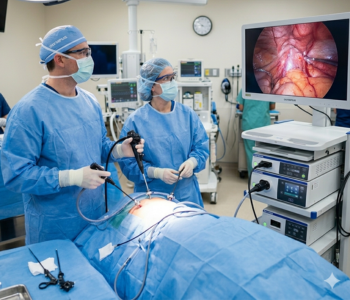

Olympus Corporation has launched a next-generation surgical imaging platform in the United States, strengthening its commitment to improving visualization and efficiency in modern operating rooms. The new system introduces advanced surgical imaging technologies designed to support minimally invasive procedures while improving clinical workflows and surgical precision.
The company unveiled the VISERA ELITE III platform as a comprehensive surgical imaging solution built for hospitals and surgical centers across multiple specialties. Olympus designed the system to deliver enhanced image clarity, better decision-making support, and flexible integration within modern healthcare environments.
According to Olympus, the surgical imaging platform integrates multiple advanced technologies into a single software-driven system. These features include True 4K and 3D visualization, Continuous Auto Focus, Narrow Band Imaging technology, and fluorescence-guided imaging capabilities. As a result, surgeons can obtain highly detailed views of anatomical structures during minimally invasive procedures.
Moreover, the surgical imaging platform combines these imaging modes within one system to simplify surgical workflows and reduce equipment complexity in operating rooms. Consequently, hospitals can streamline their technology infrastructure while maintaining access to high-performance imaging tools for various procedures.
Olympus engineers also integrated advanced visualization features such as yellow enhancement and infrared fluorescence imaging. These surgical imaging capabilities help surgeons identify critical structures, including vessels, nerves, and tissue boundaries, more accurately during operations. Therefore, surgeons can perform delicate procedures with greater confidence and precision.
In addition, the surgical imaging platform supports a wide range of surgical specialties. These include arthroscopy, bariatric surgery, colorectal surgery, gynecology, thoracic procedures, urology, and general surgery. Because the platform accommodates multiple disciplines, healthcare providers can use a single surgical imaging solution across different departments.
The VISERA ELITE III system also emphasizes workflow efficiency and connectivity. Olympus designed the surgical imaging architecture to integrate with hospital IT systems and electronic health records. As a result, medical teams can capture surgical videos, manage documentation, and share clinical data more efficiently across departments.
Furthermore, the system incorporates proprietary LED lighting technology and multiple infrared modes to improve fluorescence visibility during procedures. These surgical imaging enhancements enable surgeons to evaluate tissue perfusion and surgical margins more clearly. Consequently, clinicians may reduce complications and improve surgical outcomes in complex cases.
Industry experts emphasize that advanced surgical imaging plays an increasingly critical role in modern minimally invasive surgery. High-resolution imaging allows surgeons to visualize anatomy with greater accuracy while maintaining smaller incisions and shorter recovery times for patients. Therefore, hospitals continue to adopt innovative surgical imaging technologies to enhance procedural performance.
Olympus executives highlighted the strategic role of the new surgical imaging platform within the company’s broader healthcare technology ecosystem. The system supports Olympus’ “SEE. TREAT. CONNECT.” digital strategy, which aims to integrate visualization, treatment tools, and clinical data within a unified surgical environment.
Company leaders also noted that the surgical imaging platform features a scalable software architecture. Hospitals can activate advanced functions such as 3D or infrared imaging when needed without replacing the entire system. Consequently, healthcare organizations can expand their surgical imaging capabilities while managing capital investments more effectively.
Clinical feedback further demonstrates the value of advanced surgical imaging during complex procedures. Surgeons using fluorescence imaging with indocyanine green can assess tissue perfusion in real time. Therefore, they can make faster and more informed decisions while performing delicate surgical reconstructions.
In addition, Olympus expects the platform to support operating room standardization across hospitals and surgical networks. Because the surgical imaging system works with a wide range of Olympus endoscopes and videoscopes, healthcare providers can maintain compatibility with existing equipment while upgrading visualization capabilities.
Healthcare technology analysts note that demand for advanced surgical imaging continues to grow as hospitals prioritize minimally invasive procedures and digital operating rooms. Consequently, medical device manufacturers are investing heavily in imaging innovations that enhance clinical precision, improve efficiency, and support data-driven surgical workflows.
With the launch of VISERA ELITE III in the United States, Olympus aims to position itself at the forefront of surgical imaging innovation. The company believes the new platform will help surgeons visualize anatomy more clearly, streamline operating room workflows, and ultimately improve patient outcomes. As surgical imaging technology continues to evolve, platforms like VISERA ELITE III may redefine how clinicians approach complex procedures in modern healthcare systems.