
Pet healthcare has advanced significantly, and veterinarians now use pet orthopedic implants to restore mobility and enhance animal comfort effectively. Moreover, these innovations allow injured pets to regain strength, function, and independence, improving their quality of life significantly overall. Therefore, understanding pet orthopedic implants helps owners make informed decisions about treatments that support long-term health and active recovery processes.
Additionally, the growing pet care industry reflects the increasing demand for advanced treatments like pet orthopedic implants across global veterinary practices. On March 26, 2026, the American Pet Products Association reported total U.S. pet industry expenditures and highlighted consistent growth trends nationwide. Furthermore, pet industry expenditures reached $158 billion in 2025, increasing by 3.7 percent, while projections indicate growth to $165 billion in 2026. Therefore, this strong economic expansion emphasizes the rising investment in pet healthcare solutions, including orthopedic treatments and surgical advancements.
Understanding Pet Orthopedic Implants
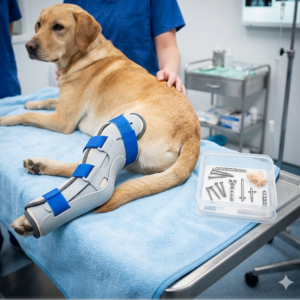
Pet orthopedic implants include medical devices designed to stabilize bones, joints, and ligaments during healing processes after injuries or surgical treatments. Typically, veterinarians use pet orthopedic implants such as plates, screws, pins, and prosthetics to support damaged skeletal structures effectively. Furthermore, these implants integrate with biological systems, enabling proper alignment and healing, which significantly enhances the recovery outcomes for injured animals. Consequently, pet orthopedic implants provide mechanical stability and ensure that bones heal correctly without complications or misalignment during recovery periods.
Common Applications in Veterinary Care
Veterinarians frequently use pet orthopedic implants to treat fractures, joint instability, and ligament injuries that affect animal mobility and comfort levels. For example, they apply pet orthopedic implants during procedures like cruciate ligament repair, hip replacement surgeries, and fracture fixation treatments regularly. Additionally, these devices assist in correcting congenital deformities and degenerative conditions, thereby restoring proper movement and reducing chronic pain effectively. Therefore, pet orthopedic implants play a crucial role in both emergency care and long-term orthopedic management for companion animals.
Materials and Design Innovations
The pet orthopedic implants made by manufacturers are constructed from materials such as titanium and stainless steel, which are considered safe for implantation procedures. In addition, the current pet orthopedic implants have coating features that increase bone integration chances while decreasing the possibility of infections or any other problems during surgery. These advancements have significantly improved the success rates of orthopedic surgeries by facilitating faster recovery rates for patients. Customized implants also help in ensuring the right fit during the post-recovery rehabilitation period.
How Pet Orthopedic Implants Work
During surgery, veterinarians carefully position pet orthopedic implants to stabilize the affected area and restore alignment within the skeletal system accurately. Next, these implants secure fractured bones or damaged joints, allowing natural healing processes to occur without disruption or further injury risks. Moreover, movement is later restored among the animals since tissue recovery takes place through the healing process around the implant, making the area stronger with time. Therefore, the pet orthopedic implants become support tools in ensuring that body strength and structural integrity are maintained effectively.
Benefits for Animals and Owners
Pet orthopedic implants significantly enhance mobility, enabling animals to walk, run, and perform daily activities without experiencing persistent pain or discomfort issues. Furthermore, these implants shorten the recovery period, allowing pets to resume their normal activities earlier and providing effective stability and preventing further complications. Pet owners are emotionally relieved knowing their animals are receiving advanced care that supports long-term health and overall well-being outcomes. Pet orthopedic implants also help increase the life span of pets in cases where, without treatment, an injury might lead to disability and a deteriorating condition.
Surgical Procedures and Recovery
Veterinary surgeons follow precise protocols when placing pet orthopedic implants to ensure accuracy, sterility, and optimal alignment during surgical intervention procedures. After surgery, veterinarians recommend rehabilitation programs that include controlled movements, physical therapy, and regular monitoring to support healing effectively over time. Also, adequate post-operative care guarantees that the orthopedic implants installed in pets work effectively by ensuring a low incidence of complications or implant failures. Consequently, pet owners need to take veterinary advice into consideration carefully in order to achieve the best results in recovery and facilitate the implant’s proper incorporation into the body.
Industry Growth and Market Trends
The rapid expansion of the pet industry further supports the adoption of advanced solutions such as pet orthopedic implants in veterinary medicine worldwide. Moreover, the 2026 State of the Industry Report presented during Global Pet Expo highlighted over 1,000 exhibitors showcasing innovative pet healthcare products and technologies. And in 2025, the number of households with pets was unchanged, with approximately 95 million U.S. households having at least one pet across the country. This stable ownership base and rising spending, in turn, drive demand for specialized treatments such as pet orthopedic implants in veterinary health care systems.
The projected growth rate of around 4.4 percent for the full year of 2026 further emphasizes the ongoing focus on investments in pet well-being and medical care. Thus, the increasing consciousness related to pet health and technological advancements are the major factors driving the increasing adoption of pet orthopedic implants in current veterinary practices.
Risks and Considerations
Orthopedic implants for pets have many benefits, but there is a small risk of infection, implant failure, or adverse reactions. However, veterinarians carefully evaluate each case before recommending pet orthopedic implants to ensure suitability and decrease the likelihood of complications during treatment processes. Regular follow-ups also permit early detection of problems that can be addressed in a timely fashion to ensure the health and functioning of the implanted structures. So, when it comes to making decisions for pet orthopedic implants for animals that require orthopedic care treatments, informed decision-making and professional guidance are still key factors.
Advances in Veterinary Orthopedics
New technologies help to develop better pet orthopedic implants, which can perform their duties efficiently, be stronger, and have good compatibility with animal physiology across different species. Furthermore, the introduction of innovations like 3D printing enables veterinarians to develop custom-made implants depending on the needs of individual patients. As a result, these new technologies provide precision during surgery and high recovery rates, ensuring better outcomes for pets all around the world. In addition, biomaterials help to develop better implant performance, further advancing veterinary medicine and expanding treatment possibilities for challenging orthopedic cases.
What Lies Ahead?
Orthopedic pet implants have revolutionized the field of veterinary science, offering practical means to help pets regain movement, minimize pain, and improve the general quality of their life. Furthermore, this innovation allows veterinarians to tackle complicated orthopedic conditions more effectively, hence guaranteeing prolonged benefits to the pets as well as their respective owners. In light of all of this information provided in the paper above, it is important to understand how this innovation works and its associated benefits. Ultimately, continued advancements in pet orthopedic implants, supported by growing industry investments, will further enhance treatment outcomes and elevate veterinary care standards globally.