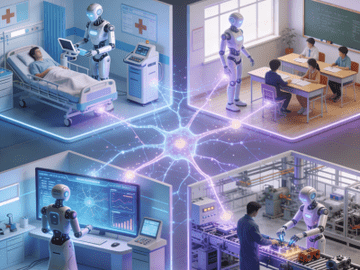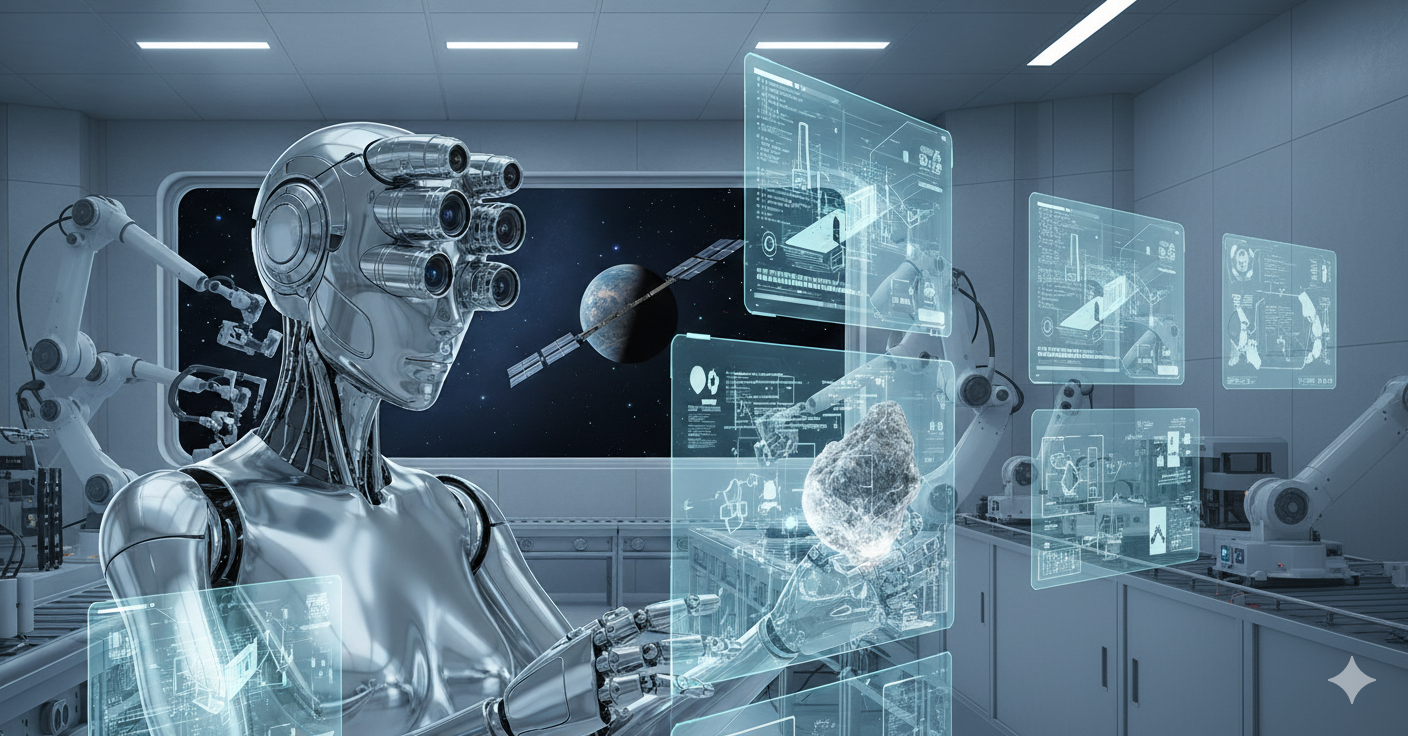

In today’s tech-driven world, Robotic Vision is quietly becoming one of the most powerful tools. It is driving automation and intelligent systems everywhere. From healthcare to space exploration, Robotic Vision enables machines to see. They can interpret and act with incredible precision. Backed by major U.S. government agencies, this technology is evolving quickly. Its impact on our lives is already profound and growing.
This market is experiencing rapid expansion now. The global Robotic Vision market is projected for significant growth. Analysts predict a strong CAGR in the coming years. This growth is driven by increasing adoption in manufacturing. It is also fueled by advances in artificial intelligence (AI). Let's look at the developments shaping the future.
Precision in Eye Surgery: A Visionary Leap for Robotic Vision
The National Eye Institute (NEI) is supporting a major breakthrough. This relates to incredibly delicate retinal surgery. Researchers at the University of Utah have developed a head-mounted device. This robot uses vision-based guidance for operation. This machine helps surgeons perform delicate procedures. It offers micrometer-level accuracy which is stunning. The robot compensates for hand tremors and patient movement. This makes it ideal for gene therapy delivery. It is a game-changer in treating inherited eye diseases.
The Advanced Research Projects Agency for Health (ARPA-H) has a bold investment. They launched the THEA program. This program invests $125 million in restoring vision. It focuses on whole-eye transplantation technologies. Robotic Vision market plays a key role in this effort. It guides microsurgical tools and reconnects nerves. This initiative offers new hope to millions affected by blindness. It combines robotics, regenerative medicine, and advanced imaging.
Exploring Space with Robotic Vision Eyes
Robotic Vision is essential for exploring new frontiers. NASA recently showcased robotic systems for space. These systems are also used in underwater missions. Robots like IceNode and Astrobee use Robotic Vision for navigation. They must navigate incredibly harsh and unknown environments. These advanced systems detect obstacles in real-time. They analyze terrain and make autonomous decisions. This capability is essential for future lunar and planetary exploration missions.
The National Science Foundation (NSF) is funding core research. Their Foundational Research in Robotics (FRR) program drives innovation. Projects focus on integrating sensing, planning, and movement. NSF also supports small startups. These startups apply Robotic Vision in real-world settings. Examples include smart manufacturing and advanced healthcare robotics. This foundational work is critical for widespread adoption.
Enhancing Accessibility and Autonomy
Robotic Vision is also improving personal accessibility. The NEI is backing a new co-robotic cane. The University of Arkansas at Little Rock developed this device. This smart cane uses a 3D vision camera. It also features speech recognition technology. This helps visually impaired users navigate indoor spaces safely. By interpreting surroundings and responding to voice commands, the device enhances independent mobility. This offers a new level of independence and safety to users.
At Oak Ridge National Laboratory (ORNL), scientists are busy. They are creating autonomous research labs now. These labs are powered by Robotic Vision and AI. They use robotic systems to operate microscopes. They also analyze data and conduct complex experiments. The ultimate goal is to accelerate scientific discovery. This is achieved by automating routine tasks. It also enables real-time decision-making in the lab.
Robotic Vision in Manufacturing and Logistics
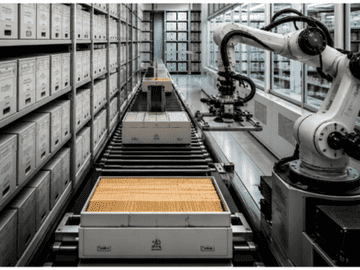
The industrial sector is one of the largest adopters. Robotic Vision has transformed modern manufacturing. Robots perform quality control with high accuracy. They detect tiny defects faster than any human. This significantly reduces waste and improves product quality. In logistics and warehousing, Robotic Vision is critical. Vision-guided robots efficiently sort and pick items. This streamlines operations and cuts fulfillment costs dramatically. The move to Industry 4.0 relies heavily on these vision systems.
The adoption of 3D vision technology is rapidly increasing. It dominated the Robotic Vision market share recently. 3D vision allows for more intricate tasks. This includes precise object manipulation and bin picking. This advanced capability makes robots more flexible. They can handle a wider variety of complex assembly jobs.
What This Means for the Robotic Vision Market
These developments show a clear trend. Robotic Vision market is no longer limited to older industrial arms. It has become a core technology for many sectors. These include healthcare, space, accessibility, and scientific research. With strong government backing, the market is expanding fast.
Robotic Vision allows machines to perceive their world. They perform tasks with human-like perception. Yet, they offer greater consistency and much higher precision. As more sectors embrace this powerful technology, the Robotic Vision market will grow. This quiet revolution is building smarter and more efficient systems for the future.