
Blood clots can quickly become life-threatening when they block blood flow to essential organs. Fortunately, thrombolytic therapy offers a rapid medical solution for dissolving dangerous clots and restoring circulation. Healthcare professionals widely use this emergency treatment to reduce complications from strokes, heart attacks, and pulmonary embolisms.
Thrombolytic therapy, also called fibrinolytic therapy or thrombolysis, uses medications to break apart blood clots inside arteries or veins. These clot-dissolving drugs improve blood flow and help prevent permanent organ damage. Moreover, doctors often administer thrombolytic therapy during emergencies because immediate intervention significantly improves patient outcomes.
The growing incidence of cardiovascular diseases is also increasing the importance of thrombolytic therapy worldwide. Rising cases of heart attacks, ischemic strokes, and pulmonary embolisms continue to create strong demand for effective blood clot treatments. Consequently, healthcare providers increasingly rely on fibrinolytic therapies to restore blood flow rapidly and reduce life-threatening complications.
According to the Centers for Disease Control and Prevention, approximately 805,000 people in the United States experience a heart attack every year. Among these cases, nearly 605,000 represent first-time heart attacks, while 200,000 occur in people with previous cardiac events. Therefore, the rising cardiovascular disease burden continues driving the adoption of thrombolytic therapy across healthcare systems globally.
Understanding Thrombolytic Therapy
Thrombolytic treatment includes medicines that are called thrombolytics. Thrombolytics act upon fibrin, the building blocks of blood clots. Once administered, the medication dissolves the clot and restores circulation to affected organs. Consequently, tissues receive oxygen again, reducing the risk of severe complications.
Healthcare providers commonly use thrombolytic therapy for ischemic strokes, heart attacks, pulmonary embolisms, and severe deep vein thrombosis. Additionally, the treatment helps patients experiencing blocked catheters or restricted blood flow in limbs. Since these conditions require urgent intervention, medical teams prioritize early diagnosis and immediate treatment.
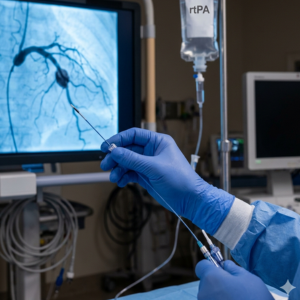
Thrombolytic therapy can be performed using either an intravenous injection method or a catheter-directed method. Intravenous delivery involves administering medicine via the blood circulation system, while catheter-directed thrombolytic therapy involves targeting the clot itself. Therefore, treatment selection depends on clot location, severity, and patient condition.
Why Timing Matters in Thrombolytic Therapy
Time plays a critical role in thrombolytic therapy success. Doctors often describe stroke and heart attack treatment using the phrase “time is tissue.” Delayed treatment increases the risk of irreversible organ damage because oxygen-deprived tissues deteriorate rapidly.
In the case of stroke patients, healthcare providers aim to begin thrombolytic therapy within 30 minutes after hospital arrival. Furthermore, experts recommend starting treatment within three to four and a half hours after symptom onset. Quick intervention significantly improves recovery chances and reduces long-term disability.
Similarly, patients having a heart attack need urgent thrombolysis treatment since the timely breakdown of clots facilitates the resumption of blood supply to heart tissue. Therefore, clinicians can prevent damage to heart muscles and enhance the survival rate.
Conditions Treated with Thrombolytic Therapy
Thrombolytic therapy is used by healthcare practitioners for several cardiovascular and vascular illnesses that threaten life. Despite any differences in treatment methods, the common goal is always to quickly restore normal blood circulation.
- Ischemic Stroke: An ischemic stroke occurs when a blood clot blocks circulation to the brain. Without oxygen, brain cells begin dying within minutes. Therefore, thrombolytic therapy helps restore blood flow before permanent neurological damage develops.
- Heart Attack: During a heart attack, the coronary vessels get clogged, resulting in limited oxygen delivery to the heart tissues. Thrombolysis therapy involves dissolving the clot and maintaining heart muscle health. Therefore, patients benefit from faster recovery and fewer complications.
- Pulmonary Embolism: Pulmonary embolism arises due to the blocking of the pulmonary arteries by clots. This disease may result in death if not treated immediately. Thrombolytic therapy is very effective in restoring circulation and improving oxygen delivery.
- Deep Vein Thrombosis: Severe deep vein thrombosis is linked to the development of blood clots in deep veins, especially the veins in the legs. In difficult cases, thrombolysis reduces inflammation, pain, and blood circulation problems. Moreover, treatment may prevent long-term vascular complications.
Types of Thrombolytic Therapy
Healthcare providers use several approaches when administering thrombolytic therapy. Each method serves different medical situations and patient needs.
- Systemic Thrombolysis: The systemic thrombolytic therapy administers medicine using an IV line to enter the patient's bloodstream. The technique is commonly used in situations where there is a need for emergency treatment in cases of strokes, pulmonary embolism, or heart attacks. Since the medication circulates throughout the body, it reaches the clot quickly.
- Catheter-Directed Thrombolysis: Catheter-directed thrombolysis therapy entails introducing a small catheter adjacent to the clot. The drugs are injected directly into the blocked area. As a result, this technique often involves small drug dosages and enhances clot detection.
- Mechanical Thrombectomy: In some cases, the combination of thrombolysis with thrombectomy is considered a treatment strategy. Thrombectomy involves the removal of the clot through mechanical means. Hence, it is usually suggested by doctors for difficult clots.
Common Thrombolytic Drugs
Several medications support effective thrombolytic therapy. These drugs activate the body’s clot-dissolving mechanisms and restore blood flow efficiently. Common thrombolytic medications include alteplase, reteplase, and tenecteplase.
tPA → plasminogen activation → plasmin formation → fibrin clot breakdown
These medications function by transforming plasminogen into plasmin, an enzyme that breaks down fibrin. The process of fibrin dissolution weakens the clot and enhances blood circulation. Patients thus benefit from quicker restoration of blood flow to vital organs.
Risks and Side Effects of Thrombolytic Therapy
Although thrombolytic therapy saves lives, the treatment carries certain risks. Bleeding remains the most frequent problem since clot-busting drugs inhibit the natural process of blood coagulation. A person may develop a nosebleed, hematuria, excessive menstrual flow, or bleeding at the point where the catheter was inserted. There have also been instances of intracranial hemorrhage, which is considered the most dangerous complication of thrombolytic therapy.
Thrombolytic agents can be used in patients only if a proper patient evaluation is carried out. Those who have had surgery recently, those bleeding, those with uncontrolled high blood pressure, or those who have experienced previous strokes in the brain may not be eligible for such treatment. Therefore, doctors balance potential benefits against bleeding risks before proceeding.
Future Perspectives for Thrombolytic Therapy
Medical developments have been making thrombolytic treatment more effective and safe. Scientists are creating targeted drug delivery mechanisms, innovative imaging techniques, and enhanced clot removal equipment. As a result, potential future treatments could dissolve clots faster and with fewer complications. The healthcare providers are also continuously exploring other thrombolytic drugs and combination therapies. These innovations may further enhance patient survival rates and reduce long-term disability following clot-related emergencies. Therefore, thrombolytic therapy remains an essential advancement in emergency cardiovascular care.
In summary, thrombolysis is crucial for the management of potentially fatal blood clots. Thrombolysis is an important treatment that helps restore blood flow and reduce damage to vital organs while increasing the chances of survival in emergency heart conditions. In addition, prompt diagnosis and timely treatment contribute greatly to effective treatment outcomes. With advancing technology, thrombolysis will revolutionize emergency care and save countless lives worldwide.