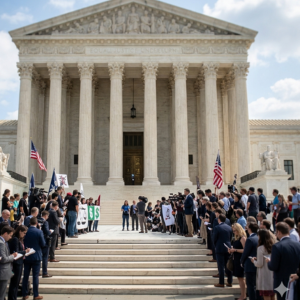

The US Supreme Court's decision to reject a key pharmaceutical challenge to Biden-era drug price reforms is a significant legal step for the healthcare and pharmaceutical industries. This enables the federal government's Medicare drug pricing program to proceed. The decision marks a significant development in the ongoing debate in the US over prescription drug costs and industry regulation. The Supreme Court's ruling is a major setback to the large pharmaceutical companies that are trying to reverse the program. The justices upheld lower court decisions that ensured the legality of the policy framework established by former President Joe Biden by refusing to take up the issue.
The Inflation Reduction Act of 2022 is a historic piece of legislation designed to reduce increasing healthcare costs, including Biden-era drug price regulations that the pharmaceutical industry has challenged. One of the major components of this act is that it allows Medicare to negotiate pricing for some expensive drugs directly with manufacturers, a move that drug manufacturers had long opposed. The pharmaceutical industry's argument that the pricing plan amounted to government-imposed price limits rather than genuine negotiation was at the center of the dispute. According to pharmaceutical companies, the strategy forced them to accept large price reductions under the threat of fines, such as high excise taxes or exclusion from Medicare programs.
Several major international pharmaceutical companies, including Novo Nordisk, AstraZeneca, Bristol Myers Squibb, Novartis, and Boehringer Ingelheim, supported the pharmaceutical challenge to Biden-era drug price regulations. These companies claimed that by forcing manufacturers to participate in what they called a coercive pricing system, the program violated constitutional protections, such as due process rights and free speech provisions. Despite these claims, several lower courts repeatedly rejected the industry's arguments, finding that the program did not violate constitutional rights and that participation in Medicare remained voluntary. By refusing to hear the case, the Supreme Court effectively upholds previous rulings, strengthening the federal government's power to proceed with this initiative.
Medicare is a government health insurance program that primarily serves people aged 65 and older. The law targets prescription drugs that account for excessive spending under Medicare. The government aims to reduce overall healthcare expenditures and beneficiaries' expenses by directly negotiating pricing with manufacturers.
Additionally, enforcement measures to ensure compliance are part of the pharmaceutical challenge to the Biden-era drug price framework. Manufacturers must negotiate prices with the Centers for Medicare & Medicaid Services (CMS) or risk having their products removed from Medicare and Medicaid programs. Companies may face significant daily excise fees if an agreement cannot be reached, which would put more financial pressure on them to participate in the process.
Despite ongoing legal issues, the first round of negotiated rates, which covered 10 drugs, has already taken effect, demonstrating the policy's practical implementation. The program's continuation indicates that efforts to keep prescription drug prices under control will continue to be a major focus of US healthcare policy. The pharmaceutical industry's challenge to the Biden-era drug price case demonstrates tensions between the government and the pharmaceutical sector over pricing transparency, affordability, and innovation. Policymakers continue to emphasize the need to address rising drug prices for patients and the healthcare system as a whole, despite warnings from industry leaders that such measures could affect investments in research and development.
The decision also highlights the limited judicial involvement in policy disputes where lower courts have already reached consistent conclusions. The Supreme Court confirmed that the pharmaceutical corporations' legal arguments did not warrant further consideration at the highest judicial level by refusing to hear the case. Hence, the Supreme Court's rejection of the pharmaceutical industry's challenge to the Biden-era drug price effort marks an important milestone in the development of American drug pricing policy. The decision upholds Medicare's increased authority to negotiate drug prices. It supports the ongoing efforts to reduce prescription drug prices while also continuing to influence the relationship between regulators and the pharmaceutical sector going forward.