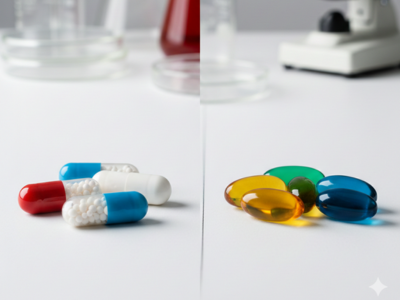

Pharmaceutical capsules play a vital role in modern drug delivery by ensuring accurate dosing, improved stability, and enhanced patient compliance. These dosage forms continue evolving as manufacturers seek reliable solutions for delivering active pharmaceutical ingredients effectively. Among available options, two-piece capsules and soft gelatin capsules dominate pharmaceutical capsules manufacturing decisions worldwide.
To understand pharmaceutical capsules clearly, it is important to examine their structure, formulation compatibility, and manufacturing complexity. Each capsule type offers distinct advantages, depending on formulation goals, ingredient sensitivity, and patient requirements. Therefore, selecting the appropriate capsule format directly impacts product performance and therapeutic success.
Understanding Pharmaceutical Capsules
Pharmaceutical capsules are oral dosage forms designed to enclose medicinal substances within protective shells. These shells improve swallowing, mask unpleasant tastes, and protect active ingredients from environmental factors. Moreover, pharmaceutical capsules dissolve within the digestive tract, enabling controlled release and effective absorption.
Pharmaceutical manufacturers around the world favor pharmaceuticals in capsule form because they are flexible, allow for precise dosing, and have high acceptance rates by patients. Capsules also support both pharmaceutical and nutraceutical formulations and continue to serve an important role in the safe and efficient delivery of many different therapeutic agents.
Two-Piece Capsules Explained
Two-piece capsules, also known as hard gelatin capsules, are made up of a cap and a body that are assembled after the filling process. These capsules are usually filled with powders, granules, or pellets using capsule-filling machines. This makes them suitable for solid dosage forms that require uniform distribution.
In addition, two-piece capsules provide flexibility in formulation since they can contain a variety of ingredients in one capsule shell. The ingredients can be powders or pellets that are mixed to provide specific release profiles. This makes two-piece capsules efficient in complex pharmaceutical formulations.
Another key advantage involves manufacturing simplicity. Two-piece capsules use preformed shells, which reduces equipment complexity and production costs. Consequently, they suit large-scale manufacturing and contract pharmaceutical production facilities. This cost-effectiveness makes them widely used across prescription and over-the-counter medicines.
However, two-piece capsules do not provide a fully airtight seal. Moisture and oxygen exposure may affect sensitive ingredients during storage. Therefore, manufacturers often apply sealing techniques to enhance capsule integrity and extend shelf stability.
Soft Gelatin Capsules Explained
Soft gelatin capsules differ significantly because they feature a single-piece, hermetically sealed shell. These pharmaceutical capsules contain liquid, semi-solid, or suspension formulations that require enhanced protection. Plasticizers added during manufacturing give soft gelatin shells flexibility and elasticity.
Soft gelatin capsules excel in protecting oxidation-sensitive ingredients such as oils and fat-soluble compounds. Because the shell encloses the fill completely, it minimizes exposure to air and moisture. As a result, product stability and shelf life improve significantly.
In addition, soft gel capsules provide faster bioavailability as they dissolve quickly in your stomach compared to solid drug formulations. This makes them more readily absorbed by the body; therefore, manufacturers will often choose soft gel formulations for their fast-acting or sensitive product lines.
Nevertheless, soft gelatin capsules require advanced manufacturing infrastructure. Specialized equipment forms, fills, and seals capsules simultaneously under controlled conditions. Consequently, production costs and technical requirements increase compared to two-piece capsules.
Structural Differences in Pharmaceutical Capsules
Structurally, two-piece capsules have distinct parts that are assembled after filling. This is beneficial for flexible formulation and easy manufacturing. On the other hand, soft gelatin capsules are made in one sealed piece during manufacturing.
Due to the structural difference, soft capsules have better protection against environmental exposure. Nevertheless, two-piece capsules have better adaptability for dry formulations. Hence, structural aspects play an important role in decisions regarding capsule selection.
Fill Material Compatibility
Two-piece capsules accommodate dry powders, granules, pellets, and blended solid ingredients effectively. This compatibility supports traditional pharmaceutical formulations and combination therapies. Additionally, these capsules suit products requiring precise dose adjustments.
Conversely, soft gelatin capsules specialize in liquid, oil-based, and semi-solid fills. These formulations cannot be effectively contained within hard capsules. As a result, soft gelatin capsules serve essential roles in nutraceutical oils and specialized drug formulations.
Manufacturing Complexity and Cost
The complexity of manufacturing is a significant consideration when choosing pharmaceutical capsules. Two-piece capsules only need simple filling machinery and standard environmental conditions to manufacture efficiently at scale.
On the other hand, soft gelatin capsules require special equipment and must be made in a controlled environment. The quality of a soft gelatin pharmaceutical capsule is dependent on three variables: temperature, humidity, and accuracy of manufacture. This means that the people involved in the manufacture of soft gelatin ceutical capsules must be highly qualified, and the manufacturing equipment must be of a high standard.
Stability and Protection Benefits
However, stability is still a major factor in pharmaceutical capsules. Two-piece capsules provide a moderate level of protection but may need further sealing for sensitive products. Thus, packaging and storage conditions become critical.
Soft gelatin capsules provide a high level of protection due to hermetically sealed packaging. This feature helps to minimize oxidation, moisture absorption, and degradation of the components. Consequently, soft capsules improve the reliability and storage life of products.
Bioavailability and Patient Experience
Patient experience significantly influences pharmaceutical capsule design. Two-piece capsules deliver reliable performance and are familiar to most patients. However, they may dissolve slightly slower than soft gelatin capsules.
Soft gelatin capsules often provide smoother swallowing and faster absorption. These benefits improve patient compliance and satisfaction. Therefore, soft capsules frequently appear in consumer health and wellness products.
Choosing the Right Pharmaceutical Capsules
The decision on what type of pharmaceutical capsules to use will vary according to many factors, such as formulation characteristics of the materials used, their stability requirements, and the type of machinery available for manufacturing these capsules. Sensitive ingredients or liquid formulations use soft gelatin capsules, whereas dry products would typically make dry products using a two-piece capsule.
Both capsules are playing a significant role in the development of new pharmaceutical products because they provide excellent versatility and cost-effectiveness, along with excellent protection and bioavailability of a product when using a soft gelatin capsule.
Therefore, an educated decision about which type of capsule to use can significantly improve the performance of the product and the patient’s results.
Conclusion
Pharmaceutical capsules remain essential tools for effective drug delivery across modern healthcare systems. Understanding differences between two-piece and soft gelatin capsules enables better formulation decisions. Ultimately, selecting the right pharmaceutical capsules ensures stability, efficacy, and patient satisfaction.