
The world’s demand for seafood continues to rise, and therefore, the feed industry must evolve sustainably. This blog explores how sustainable aquafeed practices are transforming aquaculture, and it highlights key innovations and best practices for future growth. By reading this article, you’ll understand major trends and approaches shaping the industry.
Understanding Aquafeed Production and Manufacturing
Aquafeed production begins with sourcing raw materials like fishmeal, plant‑based proteins, vitamins, and minerals to support aquatic organisms. Manufacturing facilities then apply technologies such as extrusion and pellet milling to produce high‑quality feed pellets built for optimal digestibility and reduced nutrient loss. Producers must enforce rigorous quality‑control measures throughout to ensure the final product meets strict safety and performance standards.
Crafting Nutrition‑Rich and Species‑Specific Formulations
The nutritional composition of aquafeed plays a vital role in the health, growth, and performance of aquatic species. Well‑designed feeds deliver balanced proteins, carbohydrates, fats, vitamins, and minerals tailored to species, life stage, size, and environment. Advanced formulation techniques and software help manufacturers optimize digestibility, bioavailability, and palatability while enhancing feed efficiency and growth rates.
Market Trends and Emerging Opportunities
The global aquafeed market is witnessing consistent growth driven by increased seafood demand and advances in aquaculture technologies. Regions such as Asia, Europe, and North America play major roles in market expansion, although regulatory changes, economic conditions, and consumer preferences also influence the landscape. Importantly, sustainability has emerged as a significant trend, with consumers, producers, and regulators demanding environmentally responsible practices.
Technological Innovations Enhancing Efficiency
Technological advancements are reshaping how aquafeed is produced, processed, and delivered. For example, precision aquaculture systems use sensors and data analytics to optimize feed distribution and minimize waste. Furthermore, functional ingredients such as probiotics and prebiotics are being introduced to boost gut health, feed efficiency, and disease resistance. Research into alternative protein sources—like insects and algae—is gathering pace to reduce reliance on traditional fishmeal and plant proteins.
Sustainability and Environmental Impact in Aquafeed
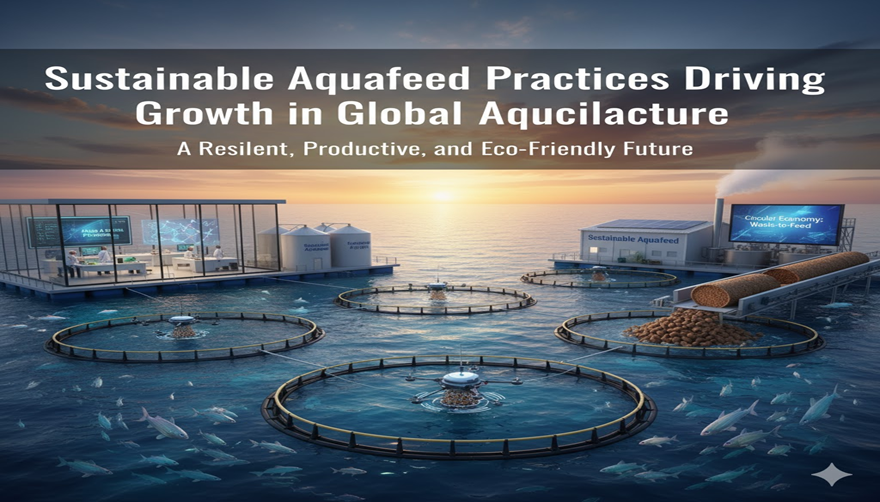
The aquaculture industry faces growing scrutiny regarding its environmental footprint, especially due to practices like over‑fishing to supply fishmeal. To mitigate these impacts, sustainable sourcing practices and the adoption of alternative protein sources are critical. Additionally, the sector is increasingly embracing circular economy strategies: recycling waste products into feed, reducing nutrient pollution, and enhancing resource efficiency. The objective is to create formulations that support healthy aquatic ecosystems while reducing ecological harm.
Best Practices for Stakeholders in Aquafeed
Stakeholders in the aquafeed value‑chain—from raw‑material suppliers through to feed manufacturers and aquaculture farms—should incorporate best practices to stay competitive and sustainable. Firstly, they should prioritize transparent, ethical sourcing of raw materials, emphasizing traceability and environmental stewardship. Secondly, implementing advanced formulation tools and software enables feed diets tailored precisely to species and life stages, thus improving outcomes. Next, embracing emerging technologies for processing, pelletizing, and feed delivery helps reduce feed waste and lowers the cost per unit of growth. Simultaneously, integrating functional ingredients (like probiotics) and alternative proteins reduces environmental impact while enhancing fish health and performance. Finally, adopting circular economy approaches—such as utilizing by‑products, reducing nutrient leaching, and elevating resource‑efficiency—fosters both ecological responsibility and business resilience.
Strategic Outlook for the Future
Looking ahead, the aquafeed market will likely evolve around the integration of sustainability, technology, and innovation. The growing awareness among consumers about environmental impacts will push brands to adopt sustainable certifications and responsible sourcing models. Meanwhile, manufacturers will continue to invest in smart‑manufacturing systems, data-driven feed delivery, and precision aquaculture to improve productivity and sustainability simultaneously. The transition toward alternative proteins—such as insects or algae—will be a differentiator for forward‑thinking companies aiming to reduce dependence on fishmeal. Moreover, circular economy innovations will enable the industry to minimize waste streams, capture value from side‑streams, and reduce the ecological footprint of aquafeed production.
Conclusion
In summary, the aquafeed sector occupies a central role in enabling the sustainable growth of global aquaculture. By understanding production mechanisms, nutrition formulation, market trends, technological innovation, and sustainability practices, industry stakeholders can make informed decisions. Ultimately, combining best practices with forward‑looking strategies will support a more resilient, productive, and eco‑friendly aquaculture food system. Now is the time for feed manufacturers, aquaculture operators, and value‑chain partners to act—because sustainable aquafeed solutions are not only beneficial for business, but essential for the planet.